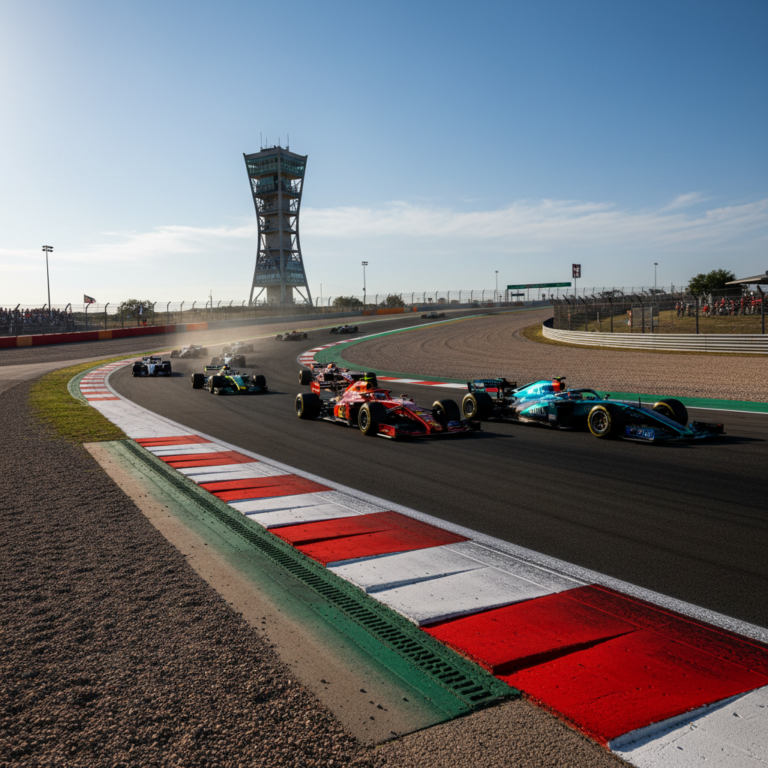
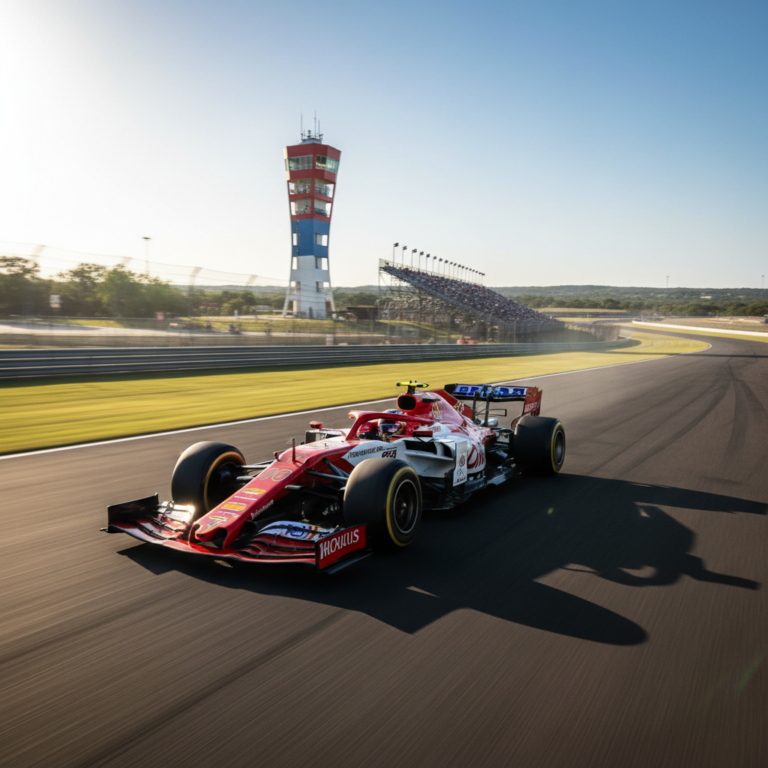
The Circuit of the Americas in Austin is famous for its sweepers, its dramatic hill climb into Turn 1, and its unforgiving bumps. This weekend, it plays host to a crucial chapter in the Formula 1 constructors’ championship. McLaren leads the standings, but Ferrari is charging hard. It is a classic battle of upgrades and on-track execution.
Yet, behind the pit wall, another fight is quietly raging.
The shadow of the 2026 regulations is already falling over the paddock. These are not minor tweaks. The upcoming rules represent one of the most radical technical overhauls in F1 history, particularly regarding active aerodynamics. How teams manage their resources between fighting for the 2024 crown and preparing for 2026 could decide the sport’s pecking order for the next decade.
The Active Aero Puzzle
The 2026 regulations aim to fix a major power unit issue. By splitting power delivery almost equally between the internal combustion engine and electrical systems, cars will suffer from a significant drop in straight-line speed unless drag is dramatically reduced.
To solve this, the FIA is mandating active aerodynamics. Both the front and rear wings will change angles on the straights to shed drag, switching to a high-downforce configuration in the corners. It sounds simple. It is not.
Early simulator tests left drivers spinning out on straights when only the rear wing shed drag. The FIA had to quickly adjust the rules to make both the front and rear wings movable, creating a balanced system known as “Z-mode” for corners and “X-mode” for straight-line speed.
“The aero balance shift is going to be massive,” says one senior engineer in the paddock. “If you get the transition wrong, the car becomes completely unpredictable.”
The Resource War: Austin and Beyond
This brings us back to the current fight. Under the strict cost cap, teams cannot simply throw money at both projects. They have to choose.

McLaren has been the benchmark for development this year. Their steady stream of upgrades has turned the MCL38 into the most versatile car on the grid. They enter Austin with a slim but precious lead over Red Bull, while Ferrari lurks just behind in third.
Ferrari is bringing a final major upgrade package to Texas. Team Principal Fred Vasseur knows this is their last real chance to close the gap. But every wind tunnel hour spent refining the floor of the current car is an hour lost on 2026 research.
It is a high-stakes game of chicken. Do you push all-in for a championship today, or hold back to ensure you are not left behind when the new era begins?
The 2026 Impact on Current Designs
The correlation between current development and 2026 is closer than many think. While the aerodynamic surfaces will look completely different, the understanding of how to manage transient aero states—the moments when the car is transitioning between high and low drag—is being developed right now.
McLaren’s recent wing flexibility controversies show just how hard teams are pushing boundary-layer aerodynamics. The lessons learned from these “mini-DRS” designs are directly applicable to the active systems of 2026.
Ferrari, meanwhile, has focused heavily on ride-height sensitivity. The 2026 active aero cars will need to be incredibly stable during dramatic shifts in downforce. Mastering mechanical platform control now gives engineers a head start for the future.
A Crucial Weekend in Texas
As the cars take to the track in Austin, the immediate focus is on points. The bumpy COTA surface will test the suspension setups of both the McLaren and the Ferrari to their absolute limits.
But watch the body language of the team bosses. The pressure is immense. A bad weekend in Austin might force a team to abandon their 2024 development early and shift all focus to the 2026 project. A dominant weekend could justify keeping the wind tunnels blowing for a few more weeks.
In modern Formula 1, the race is never just about the next corner. It is about the next era.
About the Author