Holiday shopping has barely begun, but cybercriminals are already out in full force. The Federal Trade Commission (FTC) issued an urgent warning this week about a highly sophisticated scam spreading across TikTok. This time, scammers are using artificial intelligence to target bargain hunters with promises of free money.
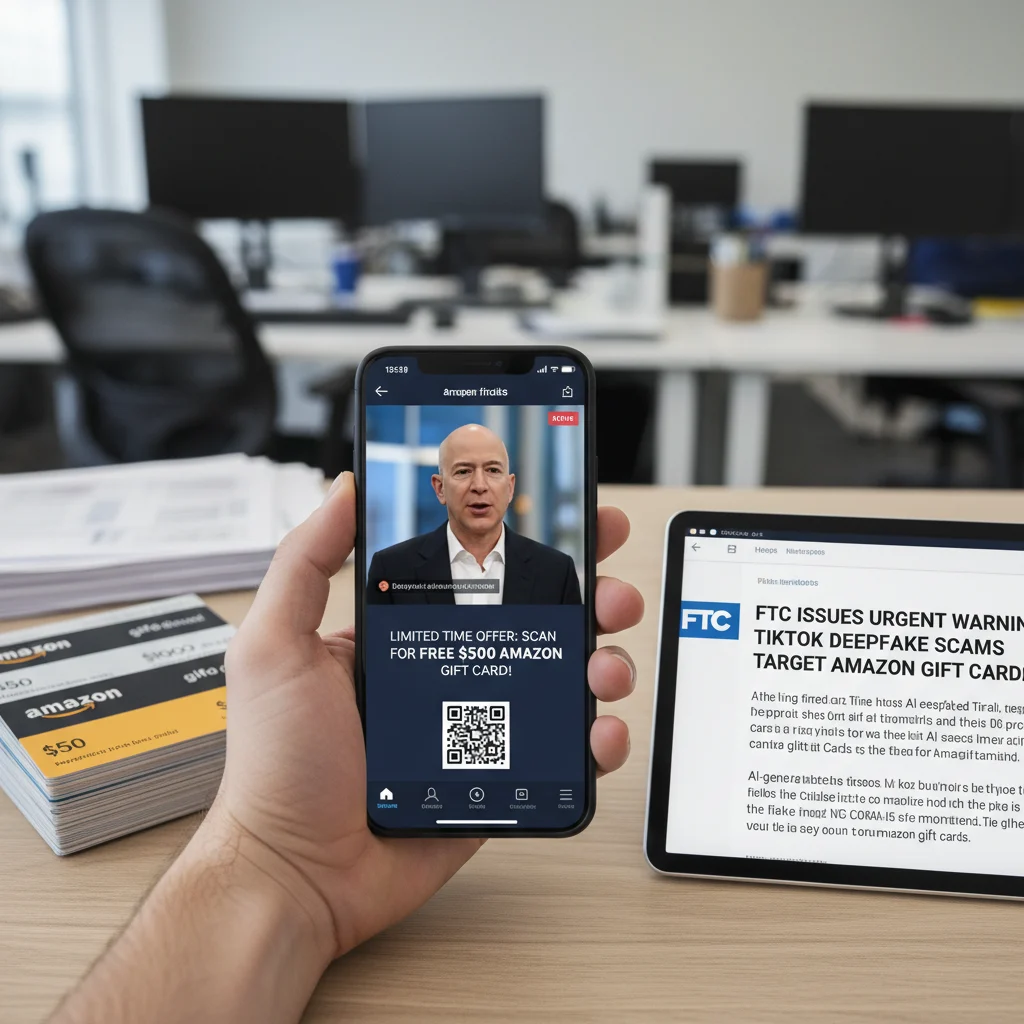
It starts with a video on your feed. A familiar face—perhaps a beloved celebrity, a famous tech billionaire, or a popular influencer—appears on screen. They excitedly announce that Amazon is giving away free gift cards worth $1,000 to celebrate the holiday season. The video looks incredibly real. The voice matches perfectly. But it is a complete lie.
The Mechanics of a TikTok Deepfake
These clips are deepfakes, highly realistic videos manipulated by AI. Scammers take real footage of celebrities like MrBeast, Taylor Swift, or Elon Musk and clone their voices. They then sync the audio to make it look like the celebrity is endorsing a massive Amazon giveaway.
To get the “free” gift card, viewers are told to click a link in the account’s bio. This link takes them to a professional-looking website that mimics Amazon’s branding. Users are asked to fill out a short survey to claim their prize. Then comes the catch: to process the $1,000 gift card, they must pay a small “activation” or “shipping” fee, usually between $2 and $5.
It sounds like a tiny price to pay for a thousand dollars in free shopping. But once you enter your credit card information, the scammers have exactly what they wanted. Not only do you lose the small fee, but your financial details are now in the hands of identity thieves. The promised gift card never arrives.
Why the Scam Is Spreading So Quickly
TikTok is the perfect breeding ground for this type of fraud. The platform’s algorithm is designed to push engaging content to millions of users rapidly. Scammers exploit this by using paid advertisements or trending hashtags to bypass standard filters. By the time TikTok’s moderation team flags and removes a video, it has already racked up hundreds of thousands of views.
The timing is also deliberate. October and November are prime times for early holiday shopping. Consumers are actively looking for deals, discounts, and ways to stretch their budgets. This seasonal pressure makes people more susceptible to offers that seem too good to be true.
How to Protect Yourself from Holiday Scams
The FTC emphasizes that recognized brands do not run giveaways this way. If you come across one of these videos, keep the following rules in mind to protect your wallet and identity:
- Never pay for a free gift: Real giveaways do not require you to pay a processing fee, shipping fee, or verification fee. If you have to pay money to get a prize, it is a scam.
- Check the source: Look at the account posting the video. Is it verified with a blue checkmark? Is it the official, verified page of the celebrity or brand? Scammers often use brand-new accounts with random strings of numbers in the username.
- Inspect the video closely: Deepfakes have tells. Look for unnatural blinking, mismatched lip-syncing, or strange shadows around the mouth and eyes. The audio might also sound slightly robotic or have unnatural pauses.
- Avoid external links: Never click on links in the bios of unverified accounts promising free goods. If you want to check if a promotion is real, go directly to the company’s official website.
What to Do If You Have Been Scammed
If you fell for one of these videos and entered your credit card information, you need to act fast. Contact your bank or credit card issuer immediately to report the fraudulent charge and secure your account. You should also monitor your credit reports for any unusual activity.
Additionally, report the scam to the FTC at ReportFraud.ftc.gov. Sharing your experience helps consumer protection agencies track these tactics and warn others before they lose their hard-earned money during the holidays.
About the Author