Lord’s was buzzing, but not for the reasons most cricket fans expected. Traditional English summers usually promise green decks and swing bowlers making the ball talk. Instead, the 2026 ICC Women’s T20 World Cup final was decided by the slow, looping drift of spin. When England captain Heather Knight lifted the silverware after a tense 14-run victory over Australia, it vindicated a daring, tournament-long tactical gamble.
England won this World Cup by turning their backs on traditional home-soil bowling tactics. They didn’t rely on raw pace or seam. Instead, head coach Jon Lewis and his staff built a spin-heavy machine that suffocated the world’s best batting lineups.
The Blueprints of the Spin Choke
The numbers tell a remarkable story. Over the course of the tournament, England’s spinners bowled nearly 60 percent of the team’s total overs. In the final at Lord’s, that reliance reached its peak. Defending a modest target of 149, England’s spin trio of Sophie Ecclestone, Sarah Glenn, and Charlie Dean bowled 12 of the final 14 overs. They didn’t just contain Australia; they dismantled them.
This was not an accidental strategy. England’s management worked behind the scenes months before the tournament to ensure groundstaff prepared dry, abrasive pitches. They wanted surfaces that would mimic subcontinental conditions rather than the damp, lush outfields typical of the British Isles.
The statistical dominance of England’s spin department throughout the campaign was historic:
- Total wickets: Spinners claimed 34 of the 45 wickets taken by England throughout the tournament.
- Economy rate: The slow bowlers conceded an average of just 5.2 runs per over.
- Dot ball percentage: Nearly 45% of all spin deliveries resulted in no run.
“We made a conscious decision to play to our strengths,” Knight said in the post-match press conference. “We have the best slow bowlers in the world. Why wouldn’t we create an environment where they can win us games?”
Three Spinners, Three Unique Roles
What made England’s strategy so difficult to counter was the sheer variety within their spin attack. Each bowler played a distinct, highly specialized role.
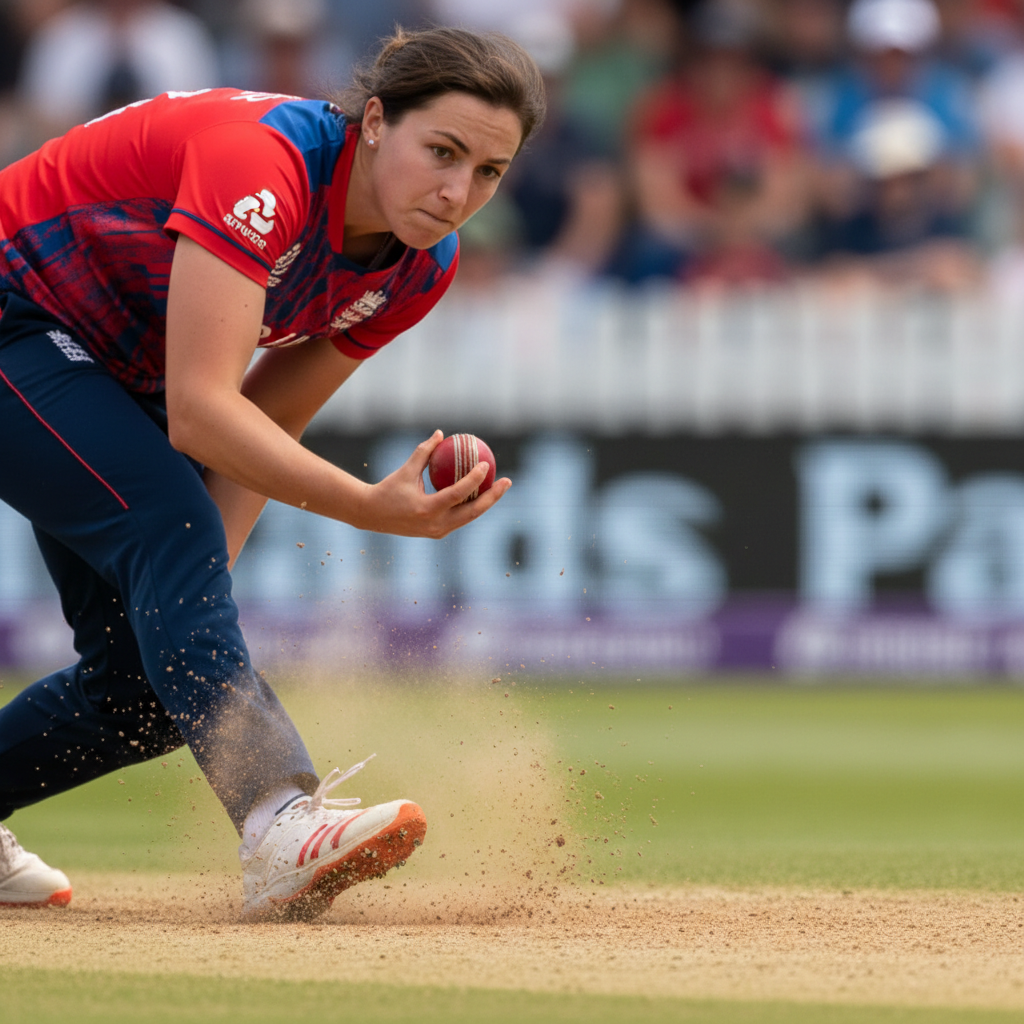
Charlie Dean: The Icebreaker
Often introduced during or immediately after the powerplay, her off-spin focused on tight lines and subtle drift. By denying batters any room to swing through the line, she forced errors early in the innings.
Sarah Glenn: The Middle-Overs Weapon
The leg-spinner operated at a faster pace than traditional leggies, making her incredibly difficult to sweep or step out to. Glenn’s ability to slide the ball into right-handed batters kept opponents pinned to their crease, drying up the boundaries when teams usually look to accelerate.
Sophie Ecclestone: The Closer
The top-ranked T20 bowler in the world showed why she is considered a generational talent. Ecclestone was used in short, sharp bursts, including the crucial death overs. While most captains turn to fast bowlers at the end of an innings, Knight trusted Ecclestone’s pinpoint accuracy. Her left-arm orthodox deliveries, darted into the blockhole or spun sharply away from chasing batters, proved impossible to hit cleanly.
Breaking the Australian Dominance
For years, Australia dominated women’s cricket with a balanced, pace-heavy attack and aggressive batting. They looked on track to do it again, sitting comfortably at 45 for 1 after their powerplay in the final.
But once Knight introduced Glenn and Ecclestone in tandem, the run rate plummeted. Australia went 32 balls without hitting a single boundary. The frustration led to rash shots. Alyssa Healy holed out to deep midwicket off Glenn, and Ash Gardner was clean-bowled trying to sweep a straight delivery from Ecclestone.
By the time the pace bowlers returned for brief spells, the damage was already done. The chase had stalled, and the asking rate had climbed to over ten runs an over—a mountain too high even for Australia’s deep batting order.
A New Era for English Cricket
This tactical triumph might change how England approaches home tournaments in the future. By proving they can win on dry, spinning tracks at home, they have shattered the old stereotype that English teams only excel on green, grass-covered pitches.
It was a masterclass in modern T20 strategy: identifying your world-class assets, preparing the conditions to suit them, and having the courage to stick to the plan under immense pressure. On a historic afternoon at Lord’s, spin didn’t just win the day—it secured a world championship.
About the Author