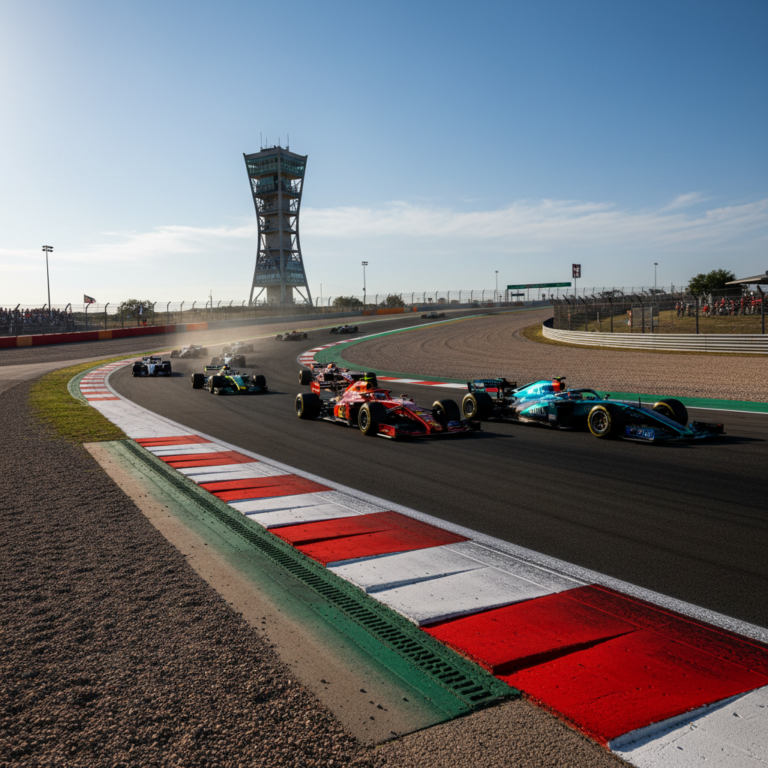
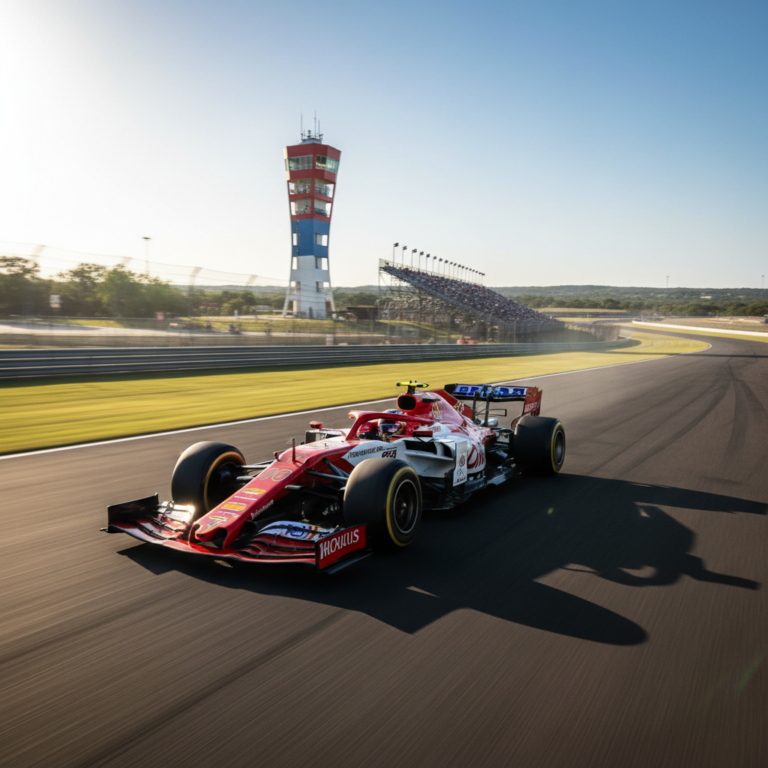
Formula 1 arrives in Austin this week with a script nobody could have written twelve months ago. The United States Grand Prix at the Circuit of the Americas has historically been a place where championships are wrapped up. This time, it is the starting gun for a chaotic, unpredictable sprint to the finish line. At the heart of the drama are McLaren and Ferrari, two legendary teams locked in a fierce battle that is being silently shaped by a revolution still two years away.
It is the looming shadow of the 2026 engine regulations that has blown this current championship wide open.
The Great Balancing Act
Usually, dominant teams like Red Bull would keep pouring resources into their current cars to maintain their lead. But F1’s strict cost cap, combined with sliding-scale aerodynamic testing limits, has changed the math. Teams must now decide how to split their brainpower between the current campaign and the massive redesign required for 2026. The upcoming regulations introduce a 50-50 split between electrical and internal combustion power, alongside active aerodynamics and the removal of the complex MGU-H system.
This strategic headache has triggered a fascinating convergence on the track. McLaren has emerged as the grid’s fastest car, but they cannot afford to ignore the future. Under team principal Andrea Stella, the Woking-based squad has managed to extract incredible performance from their current floor and front wing concepts without sacrificing their long-term 2026 program. Lando Norris and Oscar Piastri are regularly fighting for wins, hunting down Red Bull’s Max Verstappen in both championships.
Yet, Ferrari is right there. The Scuderia, led by Fred Vasseur, has taken a slightly different approach. They struggled mid-season with high-speed bouncing after a floor upgrade in Spain, but they recovered brilliantly. Charles Leclerc’s emotional win in Monza and a strong showing in Baku proved that Ferrari’s current package is highly efficient, especially on low-drag tracks.

The Wind Tunnel Trap
Why does the 2026 shift make this weekend in Austin so unpredictable? It all comes down to resources. The current rules limit development in very specific ways:
- The sliding scale: The higher a team sits in the standings, the less wind tunnel testing time they get.
- The budget cap: Every dollar spent fixing a current aerodynamic balance issue is a dollar taken away from the 2026 power unit integration.
- Staff allocation: Engineering teams must be split between optimizing the current car and starting from scratch for 2026.
This creates a psychological trap. If McLaren or Ferrari push too hard to win the 2024 constructors’ championship, they will have less development time to design their 2026 machine—a car that will set the pecking order for years to come. Every hour spent in the wind tunnel fixing a current balance issue is an hour lost on the future. But when a championship is this close, it is impossible to tell drivers to give up on today for the sake of tomorrow.
What to Expect at COTA
This tension is highly visible in the upgrade packages brought to COTA. Austin features a brutal mix of high-speed sweeps, a bumpy surface, and slow, technical corners. It is the ultimate test of a car’s aerodynamic versatility. Rumors suggest both McLaren and Ferrari are bringing their final major upgrades of the season to Texas. After this, their design offices will pivot almost entirely to the 2026 project.
The stakes are incredibly high. For McLaren, a constructors’ title would mark their first since 1998, a monumental achievement for a team that was fighting at the back of the grid just a few seasons ago. For Ferrari, it is about restoring the pride of Maranello before Lewis Hamilton arrives next year.
Normally, the technical stability of late-cycle regulations makes the sport predictable. This time, the sheer scale of the 2026 changes has done the exact opposite. By forcing teams to keep one eye on the future, F1 has accidentally created one of the most volatile and exciting title races in a generation. Who blinks first in Austin will tell us everything we need to know.
About the Author