The Golden Ticket: The Endless Wait for Jofra Archer
England has a fever. The only cure, apparently, is genuine, unadulterated speed. As the management team looks ahead to the 2026-27 Ashes tour in Australia, the blueprint is blindingly obvious. To win Down Under, you need bowlers who can push the speed gun past 90 miles per hour. Without them, English dreams tend to die quick, painful deaths on the flat, unforgiving surfaces of Brisbane and Melbourne.
At the center of this master plan sits one man: Jofra Archer. When he is on song, Archer makes batting look like a dangerous chore. His natural, whip-like action generates effortless velocity. But his injury sheet reads like a medical textbook. Stress fractures, elbow surgeries, and long, grueling months of rehabilitation have kept him out of the Test arena since 2021.
Managing Director Rob Key and coach Brendon McCullum are playing a high-stakes game of patience. They are easing him back through short-form cricket, protecting his fragile frame like a priceless heirloom. Yet, a T20 four-over spell is vastly different from bowling three distinct spells on a baking hot afternoon in Adelaide. Can Archer’s body ever endure the physical toll of five-day cricket again? Nobody knows. But England is willing to wait, because a fit Archer changes everything.
The Supporting Cast of Speedsters
England cannot pin all their hopes on a single pair of shoulders. They need a contingent. Mark Wood remains the gold standard for pure, hostile pace in the current squad. He can blow any batting lineup away on his day. However, Wood will be 36 by the time the next Ashes series begins. Expecting him to carry the attack across five Test matches is not just optimistic; it is reckless.
This reality has forced selectors to search elsewhere. Brydon Carse has emerged as a serious option. He brings a raw, combative style that suits Australian pitches. He runs in hard, hits the deck, and does not mind getting dirty. Gus Atkinson has also enjoyed a stellar rise, showing he has the skill and temperament for the highest level, though he is more of a classical seamer than an out-and-out enforcer.
Then there are the wildcard options. Olly Stone has the attributes but has constantly fought his own body. Josh Tongue showed immense promise before being sidelined by a complex pectoral injury. The talent is there, but the medical room is far too crowded.
The Catch-22 of Red-Ball Preparation
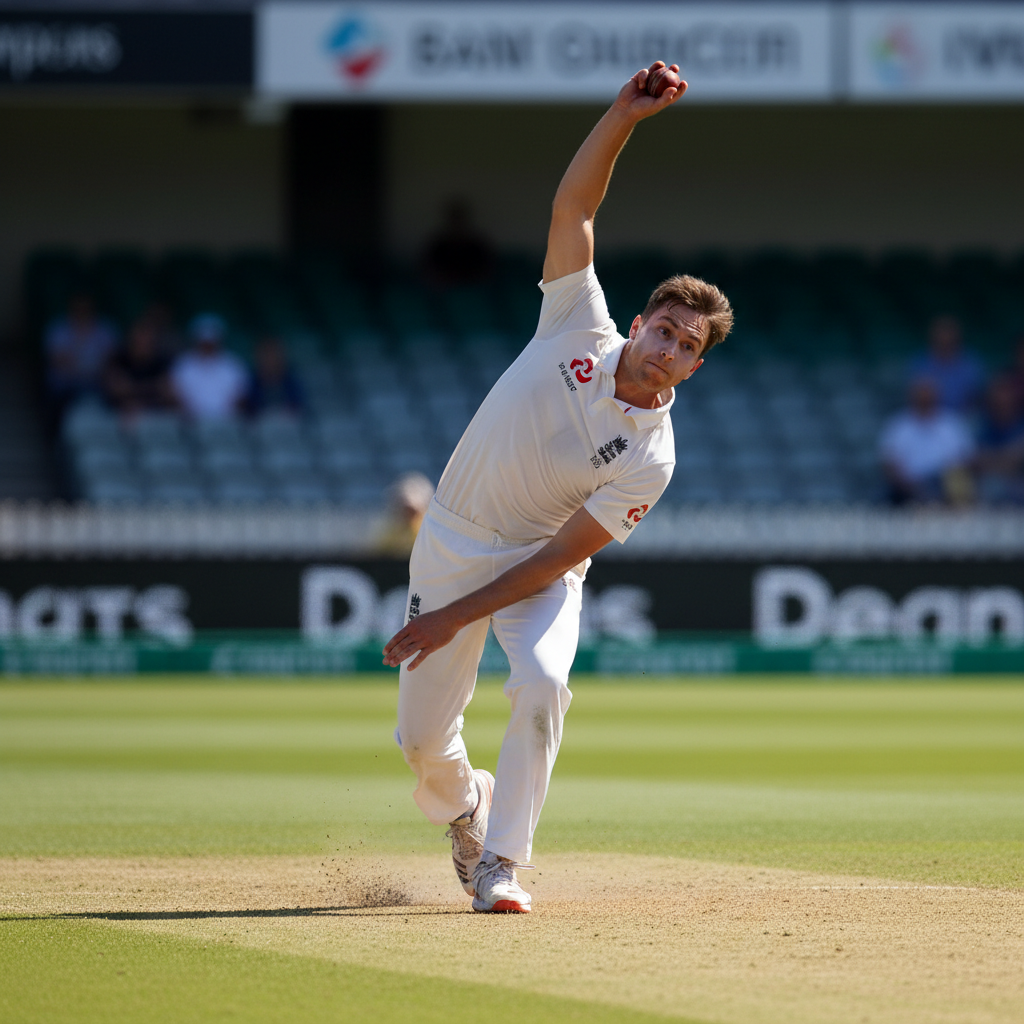
This creates a massive logistical headache for England’s coaching staff. Fast bowlers need to bowl to stay fit. The human body must adapt to the repeated stress of landing with up to ten times its weight going through the front foot. If these quicks do not bowl enough red-ball overs in county cricket, they will break down when asked to deliver 40 overs a week in Australia.
But if they bowl too much, they might not even make the plane. The County Championship is a grueling circuit, often played on soft, damp pitches that encourage medium-fast wobble rather than raw pace. It is a hostile environment for a bowler trying to preserve their joints for a battle two years away.
England’s solution seems to be a highly individualized, centrally contracted management program. Bowlers are told exactly when to play, when to rest, and how many overs to bowl in the nets. It is cricket by numbers, designed to peak at a very specific moment in late 2026.
The Australian Reality
The Australian team will not lose sleep over England’s plans just yet. They have spent a decade dominating at home with a relentless, durable trio of Pat Cummins, Mitchell Starc, and Josh Hazlewood. Those bowlers rarely break down. They know how to extract bounce from lifeless wickets through sheer physical repetition.
England’s search for express pace is born out of necessity. Previous tours have shown that military-medium bowlers, no matter how accurate, are simply cannon fodder on flat Australian decks. The ball does not swing for long, and without lateral movement, speed is the only weapon left.
Ultimately, the 2026-27 Ashes will likely be decided in the medical department as much as on the pitch. If England can land in Australia with three fit bowlers capable of hitting 90 miles per hour, they stand a real chance. If not, history is doomed to repeat itself.
About the Author