
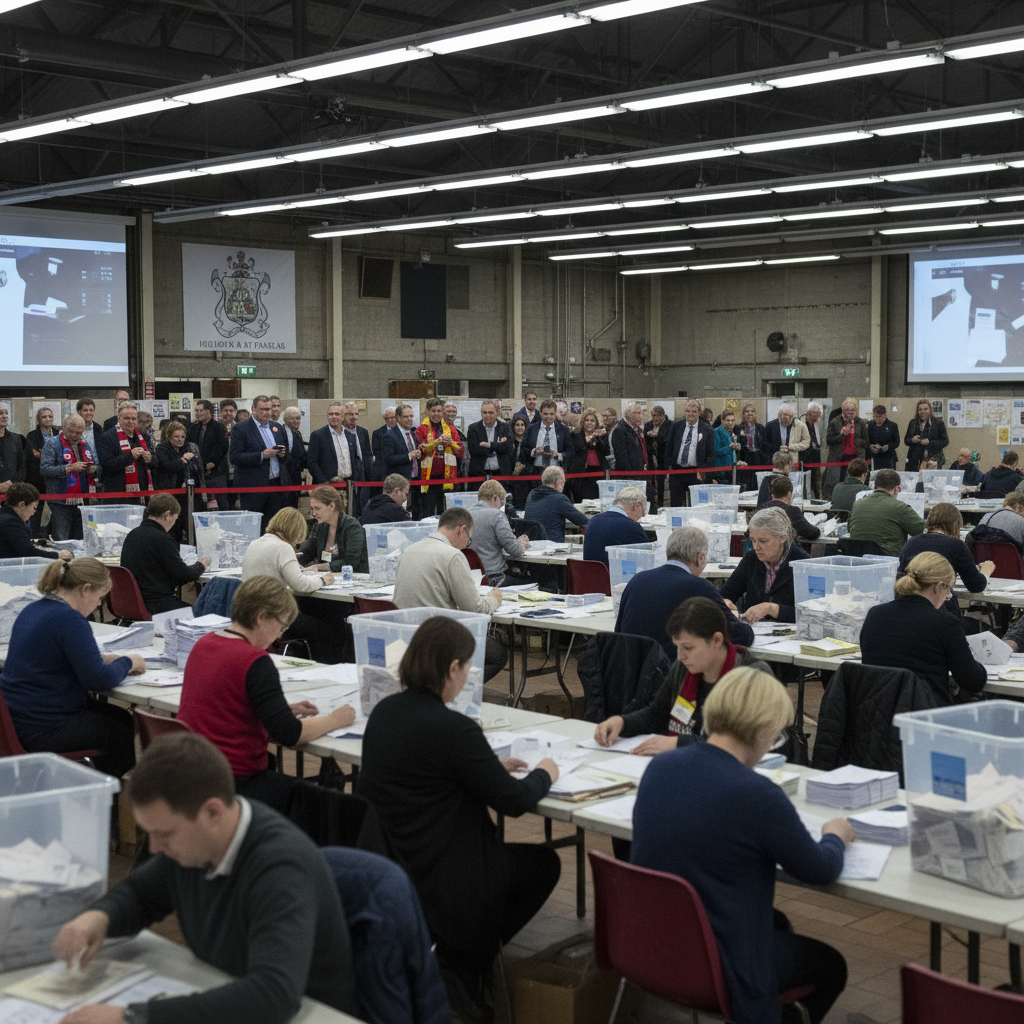
Usually, a by-election is all about the winner. Sagal Abdi-Wali certainly has a story worth telling. Arriving in Britain as a child refugee from Somalia in the 1990s, she went from Camden council leader to Keir Starmer’s successor as the new Labour MP for Holborn and St Pancras. But as dawn broke over the London count, all eyes were on the runner-up.
A Double Blow for the Green Leader
Zack Polanski, leader of the Green Party of England and Wales, is facing the toughest week of his political life. His second-place finish in north London would normally be seen as a decent effort. The Greens secured a big swing, landing their second-best Westminster by-election result ever. But any hope of celebrating that momentum was instantly swallowed by a civil war tearing his party apart.
The real crisis did not start in London. It began days earlier at the Green Party conference in Brighton, where activists passed a motion declaring Zionism a form of racism. The text described Zionism as an ideology supporting an "ethnonationalist Jewish state" and demanded a single Palestinian state across all historic Palestine. The decision triggered immediate outrage.
Missing in Action
Polanski was not even in the room when the vote happened. He chose to stay in London to campaign, a move that left him accused of dodging the issue. For days, he avoided the media. When he finally appeared on BBC Breakfast, his defense was awkward. He admitted the motion was "imperfect" and said he would only have voted for it if certain amendments had passed.
The fallout has been swift and brutal. Polanski, who is Jewish, now finds himself banned from Israel. Mainstream Jewish groups, including the Board of Deputies of British Jews and the Jewish Leadership Council, have fiercely condemned the party. European sister Green parties have also distanced themselves.
Rebellion from Within
The anger inside his own party is just as dangerous. Green membership has tripled over the last year, but some insiders warn this rapid growth has altered the party’s DNA. They argue that a flood of hard-left activists is now more focused on Middle Eastern geopolitics than environmental issues. One party figure did not mince words, saying Polanski has "created a monster he either can't or won't control."
Perhaps the most damaging blow came from Caroline Lucas. The former Green leader and giant of the movement went on BBC Newsnight to accuse Polanski of a total failure of leadership. Crucially, she refused to offer him her backing to stay on.
A Fight for Political Survival
Polanski insists he is not going anywhere. Cornered by reporters after his election defeat, he was adamant. "Of course I can carry on," he said. Yet he refused to outright reject the controversial motion, pointing instead to what he called an "ongoing genocide" in Gaza—an accusation Israel denies. Asked if he still supports a two-state solution, Polanski demurred, claiming "it is not our role to decide."
He promised that the Greens remain an open, inclusive party where no one is excluded based on their faith. But promising unity is easy; achieving it is another matter. The campaign trail in London is quiet now, but the battle for Polanski's political future has only just begun.