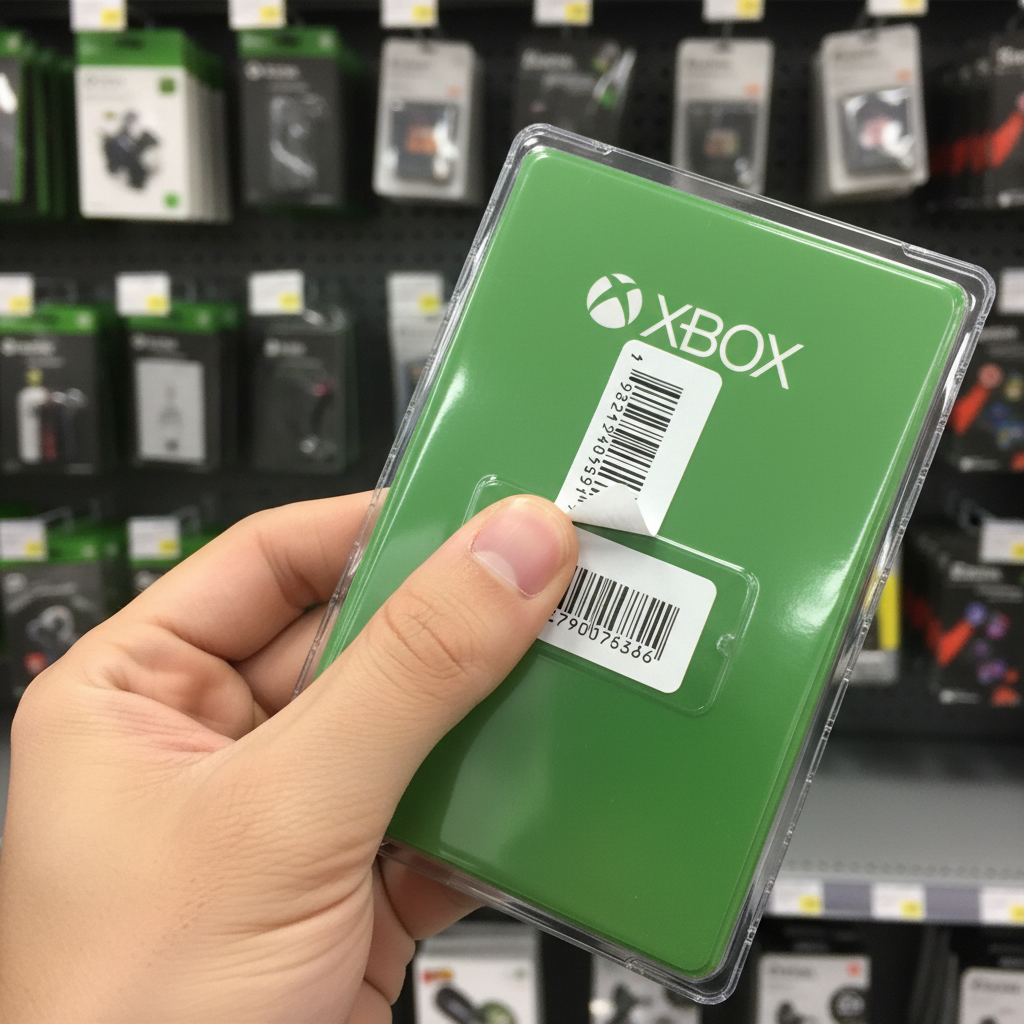
The holiday shopping season is kicking into high gear, but cybersecurity experts are already warning shoppers about a quiet, physical threat hiding on store shelves. A clever scam targeting physical Xbox gift cards is spreading through major retail outlets. It is cheap, simple, and incredibly difficult to catch at a glance.
The fraud does not rely on sophisticated hacking or database breaches. Instead, it uses a simple piece of paper. Criminals are slipping into busy stores and placing fake barcode stickers directly over the real ones on the backs of gift card packaging. When an unsuspecting buyer takes the card to the register, the consequences are immediate.
How the Barcode Overlay Scam Works
The mechanics of the scam are surprisingly low-tech. Scammers print sheets of adhesive labels containing barcodes linked to their own accounts. They target popular gaming cards, especially Xbox gift cards, because digital gaming currency is easy to launder or quickly resell online.
Once inside a store, the thieves quickly paste their fake stickers over the legitimate barcodes on the display racks. When you hand the card to the cashier, the scanner reads the top sticker. You pay the cashier, the register prints a receipt, and you walk out with the physical card. However, the money actually activates the scammer's account, leaving you with a worthless piece of cardboard.
A Costly Surprise for Shoppers
Many victims only discover the fraud days or weeks later when the recipient tries to redeem the code. Tom Miller, a shopper from Columbus, Ohio, learned this the hard way.
“I bought a hundred-dollar Xbox card for my nephew's birthday,” Miller said. “He tried to log in and use it that evening, but the system kept saying the card was not activated. We looked closely at the packaging and noticed we could peel a sticker right off the barcode. The store could not offer a refund because their system showed the transaction went through successfully.”

This scenario is becoming increasingly common. Sarah Jenkins, a retail security analyst at SecureCart, notes that physical tampering bypasses traditional firewalls. “It targets the weakest link in the chain: the physical point of sale,” Jenkins explained. “Because cashiers are scanning quickly to keep lines moving, they rarely look closely at the texture of the barcode.”
Law Enforcement Notes a Rise in Complaints
Police departments are urging retail workers and shoppers to be vigilant as the shopping rush intensifies. Detective Marcus Vance of the Metro Fraud Unit reported a notable uptick in cases this autumn.
“We have seen a 25% increase in gift card tampering complaints compared to this time last year,” Vance said. “These are not hackers working from overseas. These are local runners who walk into a grocery store or big-box retailer, swap the stickers in a matter of seconds, and walk right out.”
Retailers are attempting to combat the issue. Some stores are moving high-value cards behind customer service counters or installing protective sleeves. However, with massive holiday crowds, self-service gift card kiosks remain highly vulnerable.
How to Protect Yourself Before Buying
Fortunately, you can spot this scam with a few quick physical checks before you head to the register. Keep these tips in mind:
- Feel the barcode: Run your finger over the barcode on the back of the card. A legitimate barcode is printed directly onto the packaging. If it feels thick, raised, or bumpy, it might be a sticker.
- Look for misalignment: Check if the barcode looks crooked, off-center, or if the edges of another barcode are poking out from underneath.
- Give it a scratch: Try gently peeling the edge of the barcode with your fingernail. If a sticker starts to lift, put the card back and notify store management.
- Check your receipt: Make sure the security number printed on your receipt matches the number printed on the card itself.
If you want to eliminate the risk entirely, experts suggest purchasing digital gift codes directly from official online storefronts. If you must buy physical cards, grab them from behind the customer service desk rather than the open display racks near the entrance.
About the Author