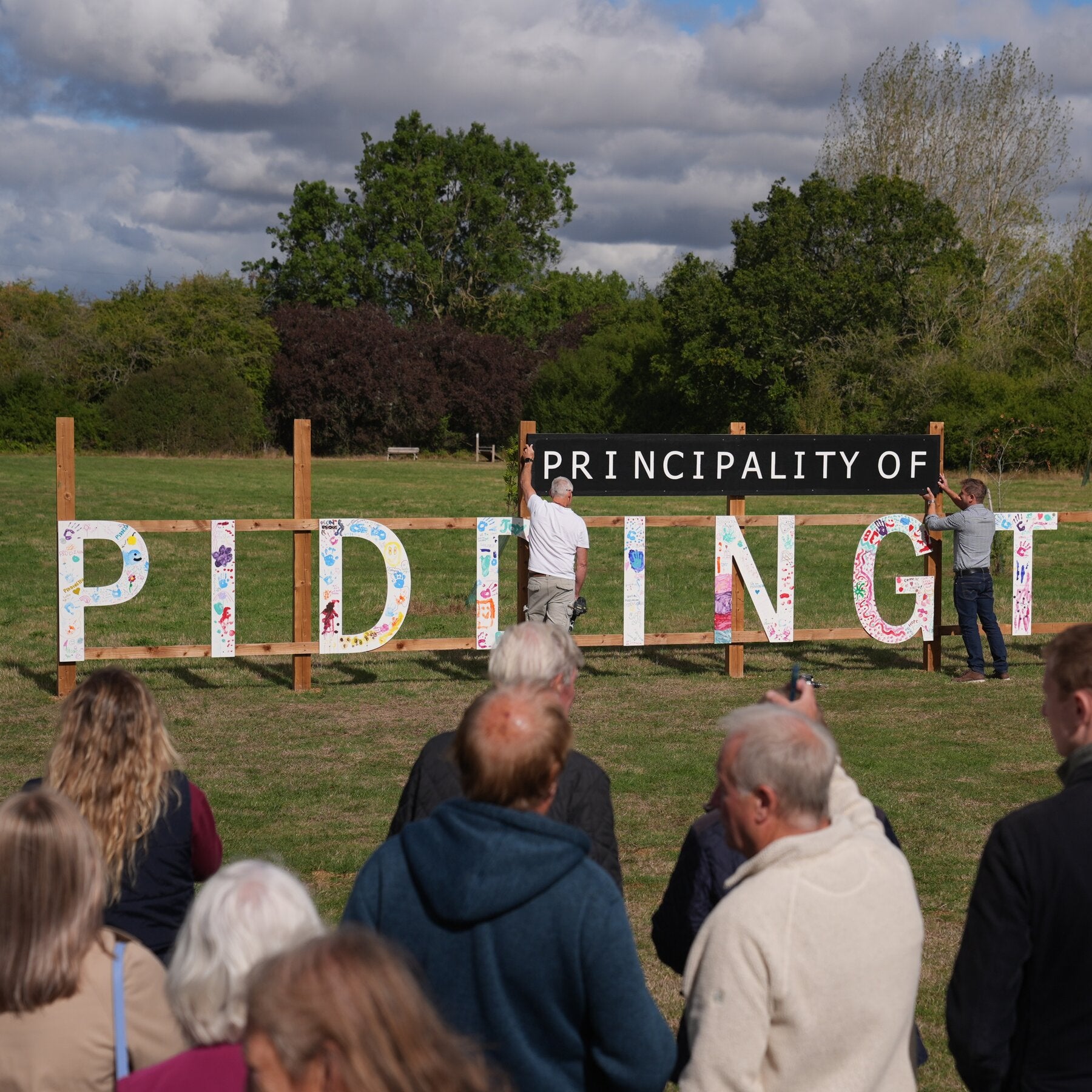
PIDDINGTON, England — Life in this corner of Oxfordshire usually moves at a crawl. There is no corner shop here. There is no local pub. Fewer than 400 people live along its quiet lanes. Yet on a recent autumn evening, parish council chairman Tim McNally stood before a packed village hall with an announcement that sounded more like an international standoff than parish business.
Piddington, he declared, had officially voted to cut ties with Great Britain.
The move was entirely symbolic, of course. Downing Street will not be dispatching diplomats to negotiate border treaties with an Oxfordshire hamlet. But the mock referendum, held in mid-September to proclaim the “Principality of Piddington,” achieved precisely what organizers wanted: it thrust a tiny village into the middle of Britain’s bitter national argument over immigration.
A 3-to-1 Population Imbalance
The dispute stems from a Home Office proposal to repurpose a disused military site on the settlement’s edge. The facility would accommodate up to 1,250 male asylum seekers aged between 18 and 65 while their legal claims are processed.
For Piddington’s 350 residents, the math was alarming. The plan would quadruple the local population almost overnight, introducing a large contingent of adult men into an area lacking basic amenities, street lighting, and regular transport.
“What a week we’ve had,” McNally told neighbors following the vote, boasting that the campaign had turned one of England’s quietest spots into a global news story. He framed the secession stunt as a playbook for other communities confronting similar government plans.
British law prohibits asylum applicants from seeking formal employment, leaving the central government legally responsible for their housing and subsistence. After years of fierce criticism over the cost of booking commercial hotels, ministers have leaned heavily toward large-scale accommodation on surplus state property, including former army camps and retired air bases.
Fear and Dissent on the Village Green
The campaign in Piddington tapped directly into safety concerns, particularly regarding women and children. The planned facility sits adjacent to the Jubilee Reserve, a public park popular with dog walkers and families.
Melise Witkin, 59, expressed unease about how the center would change daily routines. She noted that people would hesitate to stroll near the reserve if they worried about encountering large groups of unfamiliar men along country roads, acknowledging that while many might be harmless, residents had no way of knowing who was arriving.
Yet the village was far from unanimous. Twenty-six villagers cast ballots against secession, among them 54-year-old Rachel Marsh. While Marsh also considers the old military base ill-suited and bleak for housing people, she recoiled at the hostility whipped up by the protest campaign.
Marsh argued that some of her neighbors had bought into panic without question. She pointed out that claims linking asylum seekers to widespread criminal activity are not borne out by crime statistics, warning that sensationalized messaging risked driving ordinary residents into an unnecessary frenzy.
Scrutiny also fell on promotional material posted to the independence movement’s social media pages. One clip, generated using artificial intelligence, showed frightened white villagers confronting caricatured minority men in a playground. The campaign gained extra traction after tech entrepreneur Elon Musk amplified one of its posts, a moment McNally welcomed as a critical turning point for visibility. McNally rejected claims of racism, insisting the material merely captured the anxieties felt across the community.
A Nationwide Flashpoint
The unrest in Oxfordshire is part of a broader, increasingly volatile landscape across the United Kingdom. Although overall asylum applications and cross-Channel boat arrivals have dipped slightly from their post-pandemic peaks, processing backlogs remain steep, keeping demand for emergency housing high.
Tensions have spilled into direct confrontation elsewhere. In Portsmouth, masked demonstrators blocked access to freight terminals for hours. Days later, police in Gosport stepped in after crowds gathered to protest a vessel carrying rescued migrants into port.
For Whitehall, Piddington represents a recurring dilemma: where to place thousands of awaiting applicants without igniting fierce resistance from host communities. For the villagers, the new wooden sign declaring their independence remains firmly planted on the roadside — a cheeky, defiant protest against a national policy they feel has left them out in the cold.
About the Author






