
The yellow iron barricades went up before dawn on the avenues leading toward central New Delhi. By midday, hundreds of university students and young organizers had gathered at the perimeter, their voices competing with police megaphones blaring orders to disperse. Shoving broke out along the front line. Within an hour, dozens were lifted off their feet and hauled into waiting white buses.
For activists like Neha Bora, scenes like this have become a routine part of political life in India. Bora, a student organizer who has been picked up by police multiple times over the past year, brushed dust off her clothes after another standoff near the capital’s administrative district. She insisted that physical intimidation would not silence her generation.
“They want us tired, and they want us scared,” Bora said, watching officers lock a second row of steel barricades into place. “If we pack up and go home because of a detention bus, we give up our future. The government has to answer to us, not just to party rallies.”
Rising Frustrations on Campus and Beyond
Dissent among India’s youth touches several deep-seated nerve centers across the country. While Prime Minister Narendra Modi’s government touts India as the world’s fastest-growing major economy, millions of educated young people find themselves locked out of stable employment. Competitive exams for civil service and teaching jobs have repeatedly been canceled or marred by paper leaks, leaving candidates in limbo for years at a stretch.
Beyond jobs, student unions argue that campus democracy is being steadily hollowed out. Dissenting student groups face disciplinary action, administrative bans, and visits from local police intelligence units. In several states, student elections have been delayed or scrapped altogether.
The grievances extend across various fronts:
- Recurring cancellations and fraud scandals in nationwide recruitment tests
- Stagnant wages and a lack of formal contracts for university graduates
- Heavier police presence on campuses and curbs on political gatherings
- Strict public assembly laws deployed routinely to prevent protests before they start
The Cost of Speaking Out
Demonstrating in public spaces has grown increasingly risky under Modi’s decadelong tenure. Authorities lean heavily on colonial-era assembly bans, known as Section 144, which criminalize gatherings of more than four people in designated zones. Activists who persist risk criminal records, which can disqualify them from government jobs, passport issuance, or university housing.
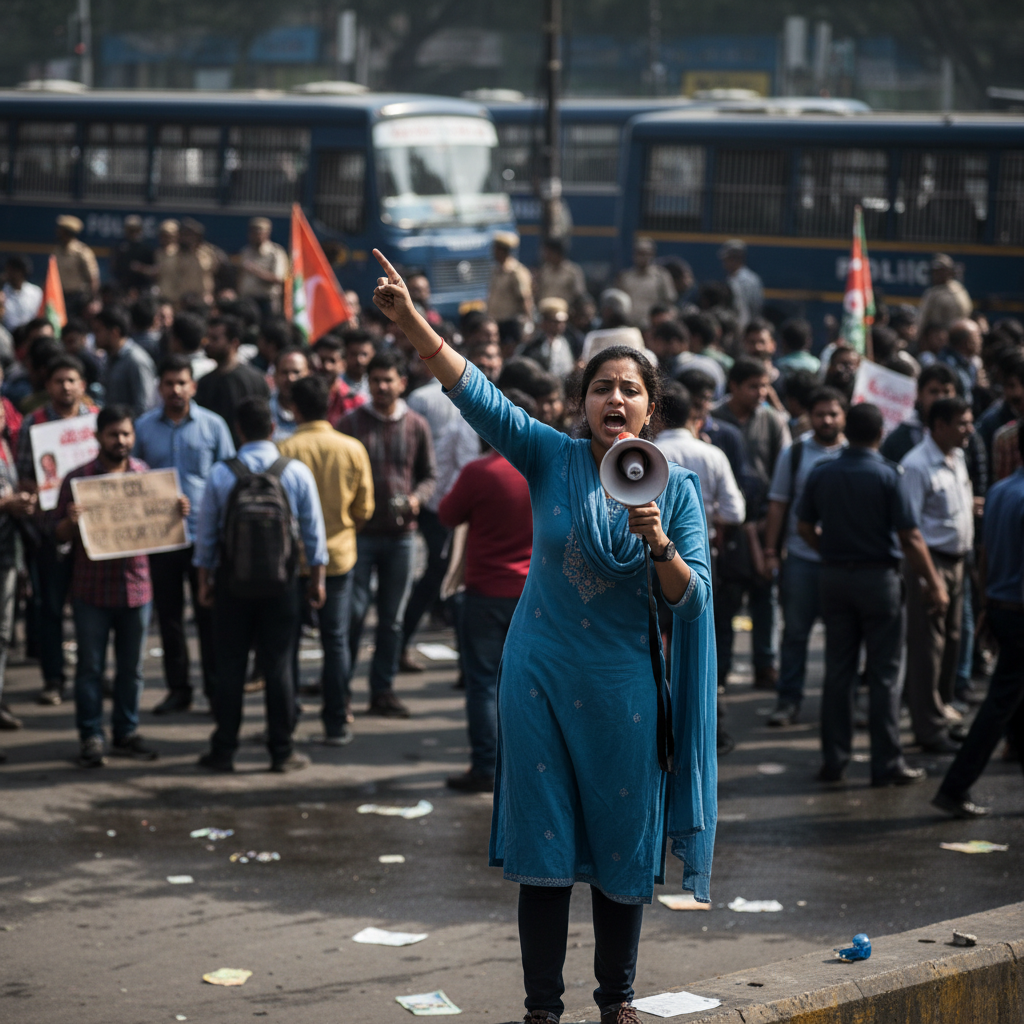
Detentions are often temporary—designed to break the momentum of a march rather than lead to formal trials. Protesters are bundled into buses, driven to suburban stations or holding grounds miles away from the city center, and held until evening before being turned loose without formal charges. It is an exhausting war of attrition.
Yet organizers point out that the legal jeopardy is unevenly spread. Prominent student leaders from minority backgrounds or marginalized castes often face harsher measures, including anti-terror investigations and months spent behind bars without bail. Despite those stakes, smaller demonstrations continue to sprout in regional hubs like Patna, Lucknow, and Bengaluru, alongside the high-profile clashes in New Delhi.
A Government Defending Order
Officials from the ruling Bharatiya Janata Party reject claims that the government is stifling young voices. Spokespeople argue that public demonstrations are often manipulated by opposition parties seeking to derail public order and undermine state institutions. Law enforcement agencies maintain that barricades and preemptive detentions are necessary precautions to avoid riots and keep traffic moving in crowded metropolitan centers.
Government supporters frequently point to expanded scholarship funds, vocational training initiatives, and startup incentives as proof that Modi’s administration prioritizes youth development. In speeches, the prime minister routinely refers to young citizens as the foundation of a modern, self-reliant India that will lead the century.
Holding the Line
That official rhetoric feels detached from reality for those standing on cracked pavement opposite lines of riot shields. Bora and her peers say they do not see their lived struggles reflected in the prime minister’s speeches. They argue that when democratic avenues for dialogue close, the street remains the only forum capable of forcing an answer.
“Every single time we raise our hands, they bring out the ropes and the lathis,” Bora said, referring to the wooden batons carried by police. “We aren’t asking for special favors. We want fair exams, honest jobs, and the right to disagree without being labeled anti-national.”
As evening settled over the city, police released the day’s detainees at a station near the outskirts. Bora met several colleagues near a roadside tea stall to review their legal lists, check on injured peers, and coordinate where to gather next. No one talked about quitting.
About the Author






