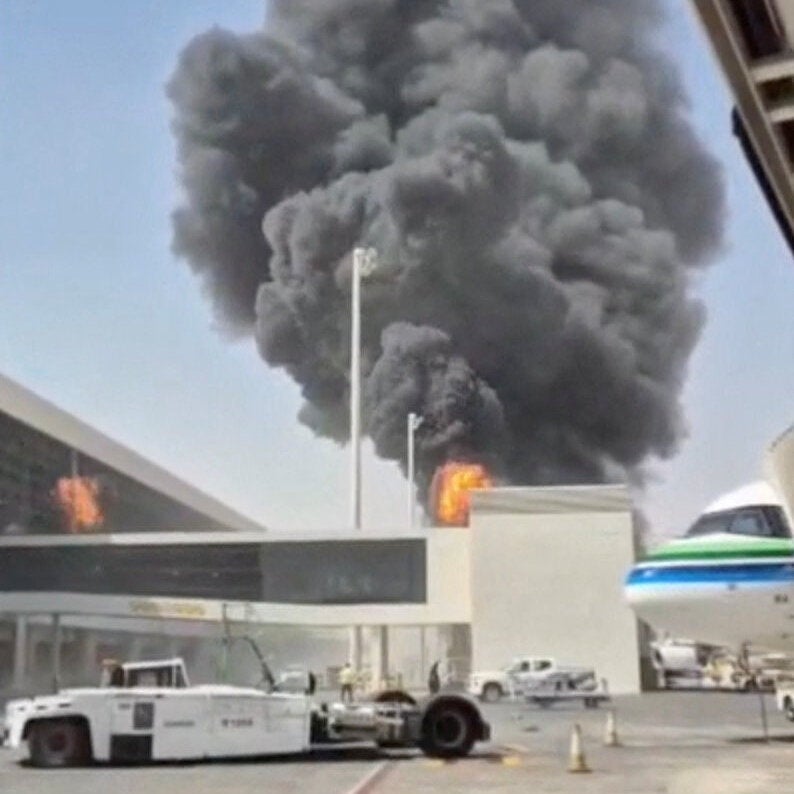
Air raid sirens across Riyadh are no longer a rare anomaly. For residents in the Saudi capital, the distant thuds of Patriot interceptors lighting up the night sky have become a stark reminder of an unresolved war right at their doorstep. A fresh wave of drone and missile strikes by Yemen’s Houthi movement has laid bare the kingdom’s military exposure, shaking confidence in its costly air defense umbrella.
The attacks have not just targeted frontier outposts in Jizan or Najran. They have pushed deep into the Saudi interior, aiming for international airports, energy infrastructure, and royal command hubs. For Riyadh, stopping these incursions has turned into an asymmetric nightmare with no simple military fix.
An Asymmetric Nightmare in the Skies
The tactical math facing Saudi military planners is brutal. Houthi forces routinely assemble loitering munitions—often built using smuggled components and Iranian technical blueprints—for tens of thousands of dollars. To knock one out of the air, the Royal Saudi Air Defense Forces must launch an American-made Patriot PAC-3 interceptor. Each battery launch costs between $2 million and $4 million.
It is an economic equation heavily tilted toward the attacker. Houthis fire drones in coordinated swarms mixed with ballistic and cruise missiles. Even if Saudi batteries intercept nine out of ten incoming projectiles, the one that sneaks through can paralyze an oil refinery or set a commercial fuel depot ablaze.
- Low-altitude threats: Drones hug valleys and dodge radar lines before climbing to strike.
- Disproportionate cost: Millions spent intercepting cheap off-the-shelf assemblies.
- Critical targets: Civil aviation hubs, desalination plants, and oil distribution terminals.
The strikes have repeatedly disrupted operations at Abha International Airport and ignited fires at Saudi Aramco storage facilities in Jeddah. While casualty counts have remained relatively low compared to the devastation inside Yemen, the psychological shock in the kingdom is profound.

Few Clean Options for Riyadh
Saudi Arabia entered the Yemeni civil war in 2015, expecting a decisive, weeks-long campaign to roll back Houthi advances and reinstate the internationally recognized government. Seven years later, the coalition finds itself locked in a grinding war of attrition.
Riyadh faces a shrinking list of choices. Stepping up airstrikes on Sanaa and northern Yemen rarely stops drone launches. Launch sites are mobile, concealed in residential quarters or rugged ravines, and quickly dismantled after firing. Heavy bombing campaigns also invite severe international condemnation over civilian casualties and deepening famine.
Diplomatic Deadlocks and Regional Friction
At the same time, walking away without security guarantees is politically unacceptable for the Saudi leadership. Crown Prince Mohammed bin Salman has staked the kingdom’s future on Vision 2030, an ambitious economic pivot meant to attract hundreds of billions of dollars in foreign investment and global tourism. Foreign investors hate missile sirens.
Direct and indirect talks brokered by Oman have stalled over core disagreements. The Houthis demand an immediate end to the air and sea blockade on Houthi-controlled ports before agreeing to any comprehensive ceasefire. Riyadh wants firm border security pacts and a buffer zone first.
Meanwhile, the kingdom’s relationship with Washington has shifted. The White House has curbed sales of offensive weaponry and pulled some air defense assets from the region, pushing Saudi officials to look at alternative defense suppliers in Europe and Asia. Yet retrofitting an integrated defense network takes years, and the drones are flying today.
For now, Saudi Arabia remains wedged between a persistent enemy armed with cheap, precise weapons and an expensive military machine that cannot guarantee total coverage. Unless backchannel talks yield an unexpected breakthrough, the skies above the kingdom will stay on high alert.
About the Author






