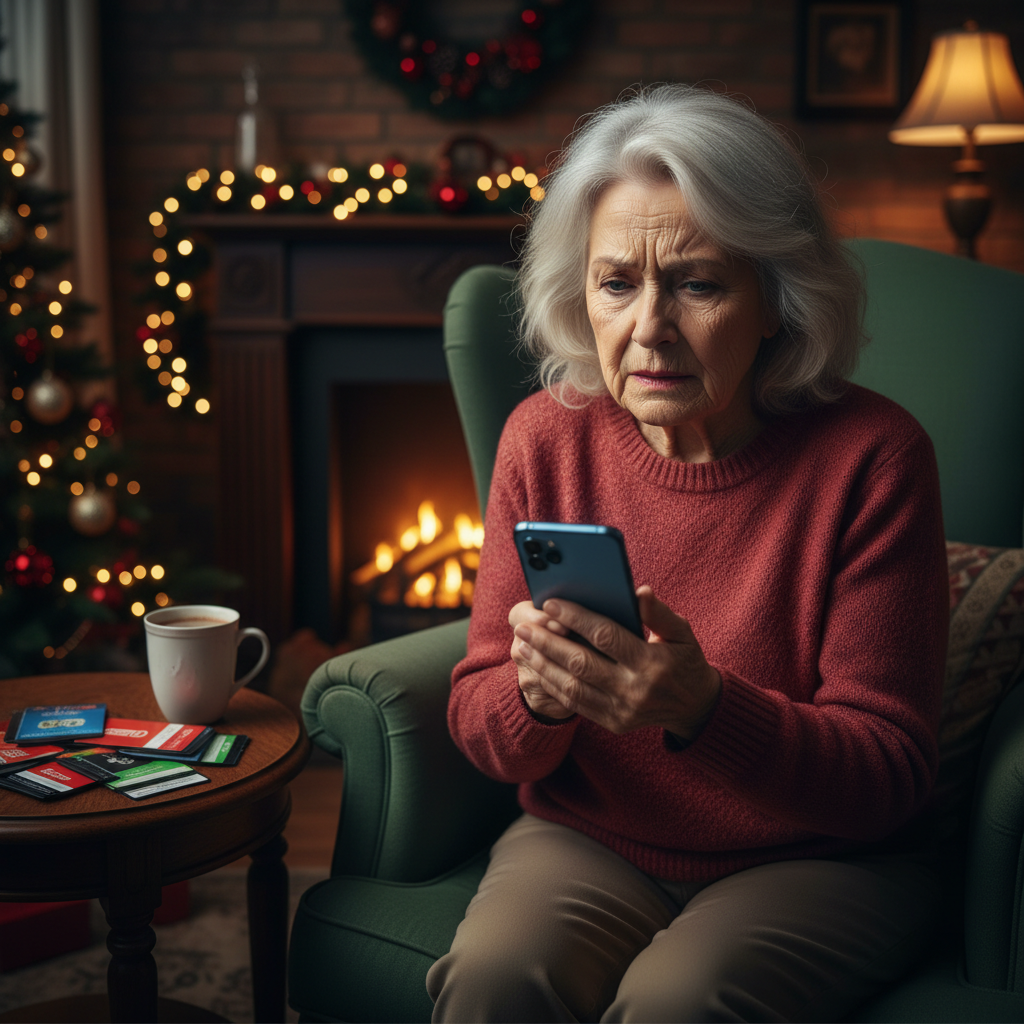
The holidays are supposed to be a time for family gatherings and festive cheer. Unfortunately, they are also prime season for high-tech thieves. The Federal Trade Commission (FTC) has issued an urgent warning about a cruel new twist on a classic scam. Fraudsters are now using artificial intelligence to clone the voices of children and grandchildren, using these synthetic voices to trick older relatives into handing over hundreds of dollars in Xbox gift cards.
It is a terrifyingly effective setup. It almost always begins with a frantic phone call.
The Perfect Illusion
Imagine answering your phone to hear your grandson sobbing. He says he has been in a terrible car accident and is currently sitting in a jail cell. He needs bail money immediately, but there is a strange catch: the “bailsman” will only accept Xbox gift cards.
To a grandparent in a state of panic, this bizarre demand might not register as a red flag. The voice sounds exactly like their family member. The fear is real. They want to help, and they want to do it quickly.
Scammers are incredibly good at exploiting emotion. By creating a false sense of extreme urgency, they prevent their victims from thinking clearly or questioning the bizarre payment method.

How AI Makes It Easy
In the past, these “grandparent scams” relied on actors or vague voices whispering over bad connections. Today, consumer-grade technology has changed the game. Scammers no longer have to guess what a relative sounds like, nor do they need sophisticated audio engineering skills.
With just a few seconds of audio, modern AI voice-cloning software can recreate anyone’s voice with shocking accuracy. Where do they get the audio? Social media is the primary source. A short video posted on TikTok, Instagram, or Facebook is all a scammer needs to harvest a clean voice sample. Once they run it through a basic, cheap online tool, they can make that voice say absolutely anything they type into a keyboard.
Why Xbox Gift Cards?
Gift cards have always been a favorite tool for con artists. They are essentially equivalent to cash, but far easier to extract from a victim. Once a target buys the cards and reads the PINs over the phone, the funds are gone instantly. They are nearly impossible to trace or recover.
But why Xbox cards specifically? During the holidays, these cards are everywhere. They are stocked on grocery store endcaps, department store shelves, and gas station counters. Buying them in bulk does not raise suspicion because they look like simple holiday stocking stuffers. Furthermore, the digital gaming market is massive and highly active, allowing scammers to quickly resell the codes on the black market or use them to purchase high-value digital goods that can be laundered later.
Protecting Your Family
The FTC urges families to have a conversation about these tactics before the phone rings. If you get a call like this, the most important thing to do is pause.
- Hang up immediately: Do not trust your caller ID. Scammers can easily spoof numbers to make them look official or familiar.
- Call the person back directly: Use a phone number you know is theirs to verify if they are actually in trouble. If they do not answer, try reaching out to another close family member.
- Establish a family password: Choose a simple, memorable word or phrase that only your family knows. If someone calls claiming to be in an emergency, ask them for the safe word. An AI program cannot guess a private family secret.
- Never pay with gift cards: Remember a universal truth. No legitimate business, police department, or government agency will ever demand payment in gift cards. If someone insists on Xbox cards, Apple cards, or wire transfers to solve a crisis, it is a scam. Every single time.
If you or someone you know has been targeted by one of these schemes, report the incident immediately to the FTC at ReportFraud.ftc.gov. Your report helps federal investigators trace the networks behind these sophisticated operations.
About the Author