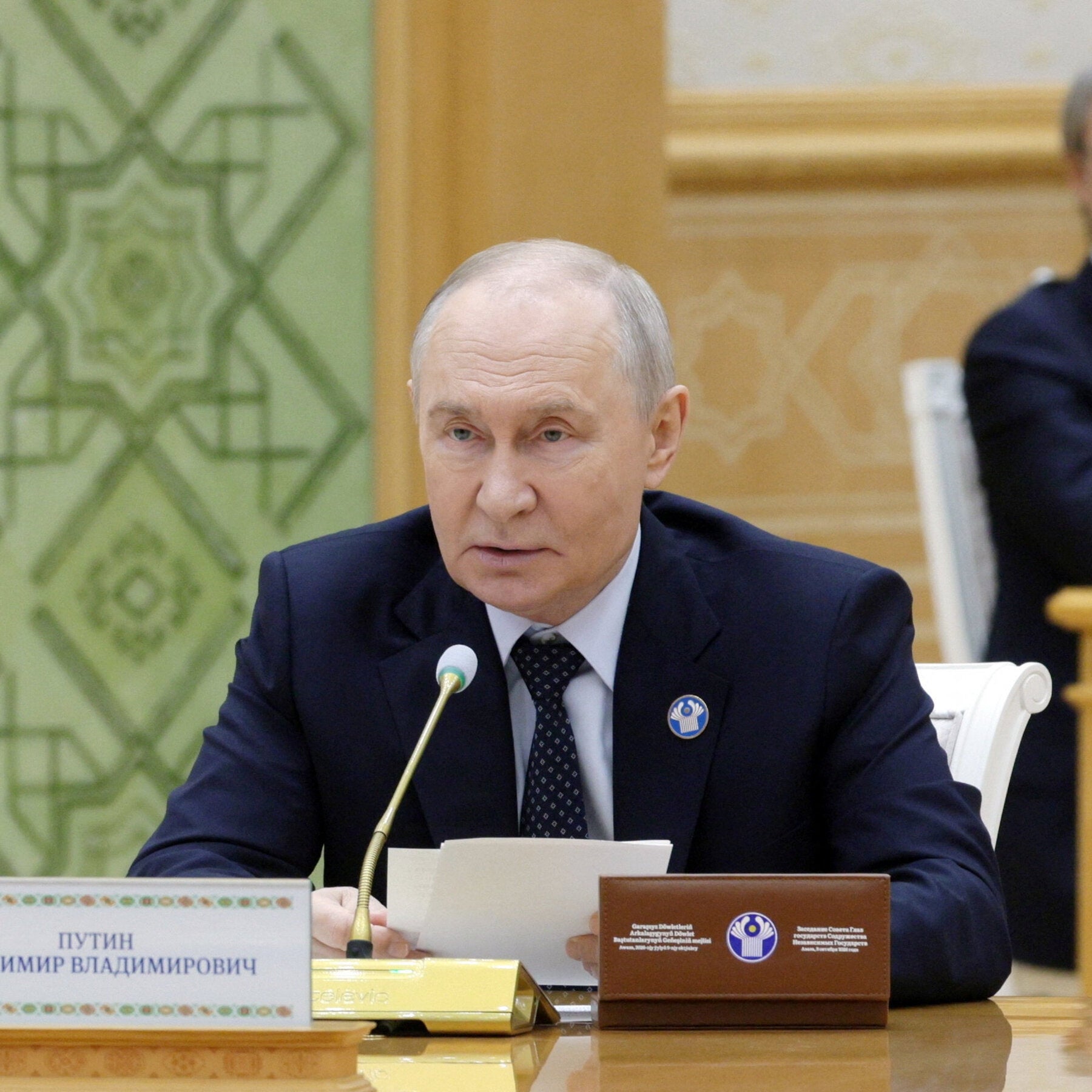
A fresh barrage of Ukrainian drones brought air traffic across Moscow to a standstill on Friday, forcing a convoy of Russian presidential jets carrying Vladimir Putin and his delegation to divert or hold in midair as they returned from Central Asia.
Flight-tracking records revealed that the presidential planes were forced into unusual holding patterns outside the capital. At least one aircraft abandoned its approach altogether, heading instead to St. Petersburg.
The ‘Flying Kremlin’ Diverts North
Mr. Putin had spent Friday wrapping up a regional summit in Turkmenbashi, a port city along Turkmenistan’s Caspian coast. Russian state news agency Tass confirmed his departure early in the afternoon. Soon after, three Il-96-300PU command aircraft took off in sequence, according to flight data recorded by FlightRadar24.
These heavy, wide-body jets are essentially Russia’s answer to Air Force One. Dubbed the ‘Flying Kremlin,’ each plane is outfitted with secure communications equipment that allows the Russian leader to direct the military and manage strategic nuclear forces while airborne. For security reasons, the Kremlin routinely deploys identical sister planes alongside the primary aircraft to act as decoys, keeping outsiders guessing about which jet actually carries the Russian president.
On Friday, secrecy met chaos in the skies. The first two planes crossed into western Russia only to enter looping holding patterns as Moscow’s air defense alert sounded. The third jet, bearing registration number 96025 beneath its wing, broke away toward Pulkovo Airport in St. Petersburg before eventually completing a journey to the capital hours later. Russian state television footage from Thursday had shown Mr. Putin stepping off that very aircraft upon his arrival in Turkmenistan. Russian officials have not confirmed whether he remained aboard that plane on the return leg, nor did the Kremlin immediately comment on the mid-flight disruption.
Airports Paralyzed by Drone Incursions
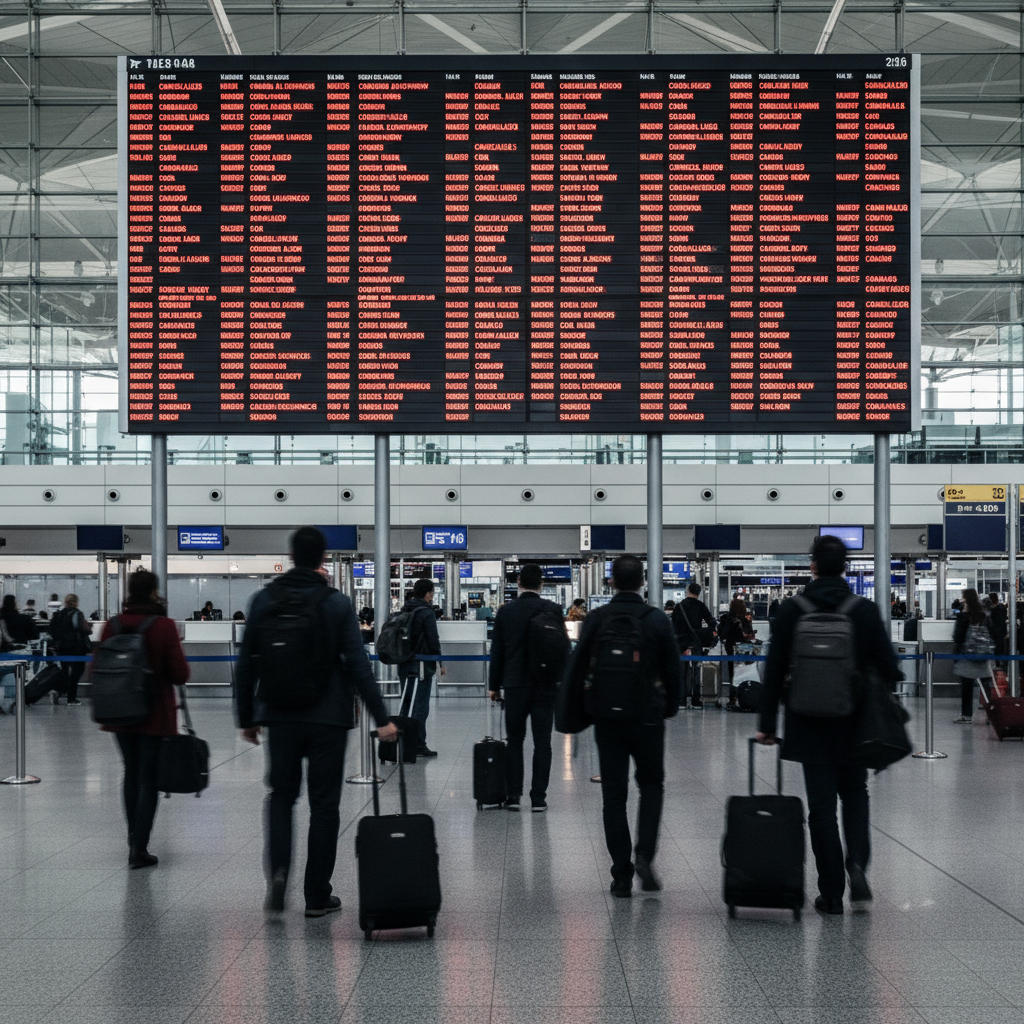
Friday’s closure affected all four major commercial hubs serving Moscow: Sheremetyevo, Domodedovo, Vnukovo, and Zhukovsky. Hundreds of domestic and international flights were grounded, delayed, or turned away as air defenses engaged incoming drones.
Such closures have grown routine in Russia over the past year. Kyiv has stepped up long-range drone raids deep into Russian territory, taking aim at military airfields, fuel depots, and transport arteries. Ukrainian airspace itself has remained entirely closed to civilian aviation since Moscow launched its full-scale invasion in February 2022.
Airborne risks have increasingly entangled leadership travel on both sides of the front lines. Just last month, Ukrainian President Volodymyr Zelensky saw his travel temporarily disrupted in neighboring Moldova when a Russian drone strayed into local airspace, grounding his transport on the runway.
Shifting Energy Politics and Diplomacy
The skyward disruption in Moscow coincided with a diplomatic pivot on energy markets. Shortly after Mr. Putin’s return, former U.S. President Donald Trump said he had reached an understanding with Moscow to relax restrictions on Russian diesel exports.
Mr. Trump described the talks as a ‘highly successful discussion’ with the Russian leader. Following the remarks, the U.S. Treasury revealed plans to temporarily issue sanctions waivers permitting Russian diesel to enter global distribution channels. Energy prices have surged in recent weeks due to the widening conflict involving the United States, Israel, and Iran, presenting an acute economic headache for American lawmakers and voters ahead of upcoming midterm elections.
Russia ranks among the world’s primary suppliers of refined diesel, yet domestic reserves have tightened severely in recent months. Repeated Ukrainian drone strikes on refineries deep inside Russian borders took significant refining capacity offline, forcing Moscow to enact an export ban to protect domestic supplies. Friday’s airborne incident over Moscow offered a stark reminder that while high-level energy negotiations continue, the war’s drone campaign reaches right into the capital’s flight paths.
About the Author






