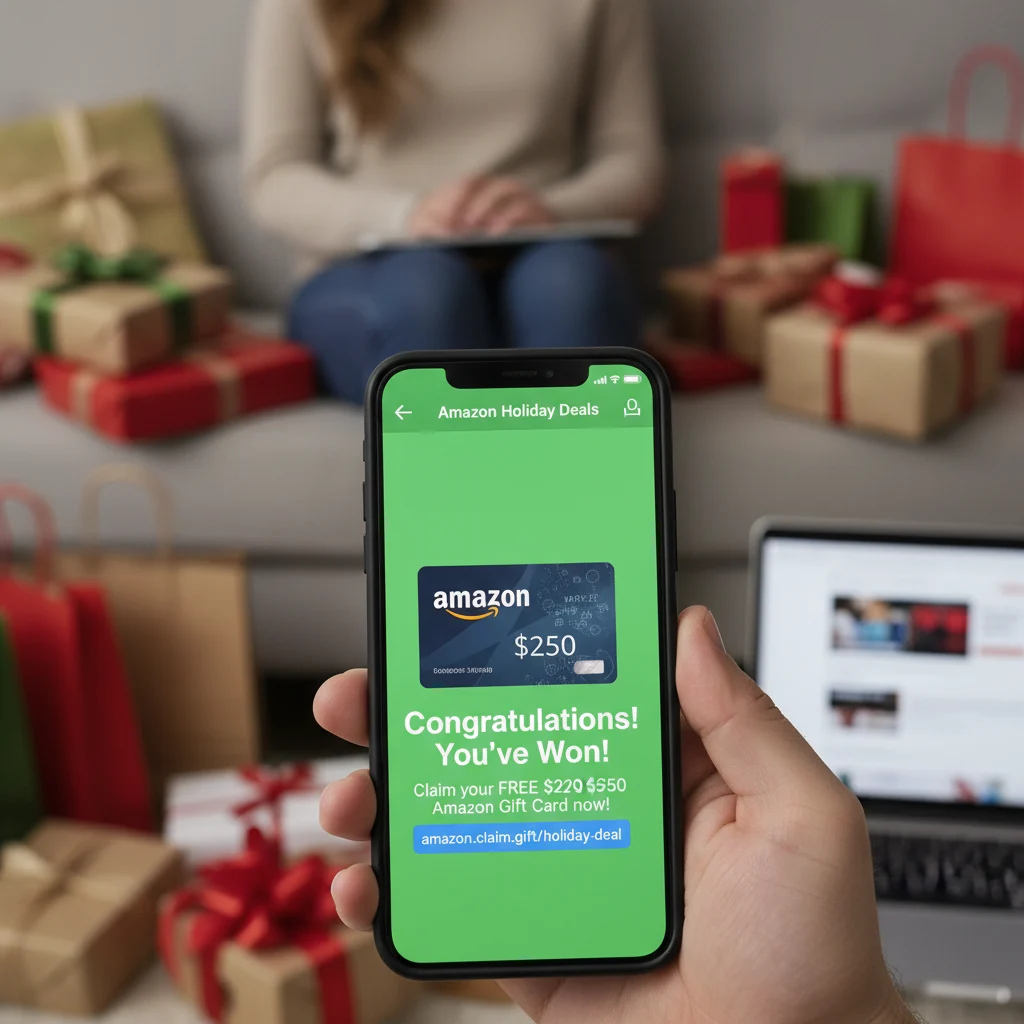
The Fraudulent Offer Sweeping WhatsApp
A massive cyberattack is quietly spreading through WhatsApp accounts worldwide this October. It starts with a simple, exciting message. A friend or contact sends you a link promising a free $250 Amazon gift card to kickstart your holiday shopping. The message looks highly official, complete with Amazon branding and a countdown timer to create a false sense of urgency.
It is a trap. Cybersecurity researchers are warning that this viral campaign has nothing to do with Amazon. Instead, it is a highly coordinated malware campaign designed to hijack mobile devices and steal sensitive personal data just before the busiest shopping season of the year begins.
How the Viral Loop Works
The scam relies heavily on social engineering to bypass traditional spam filters. Once a victim clicks the link, they are taken to a slick, professional-looking website. The page prompts them to answer a brief three-question survey about their shopping habits to “qualify” for the $250 voucher.
But there is a catch. Before victims can claim their prize, the site instructs them to share the offer with at least ten WhatsApp contacts or five active groups. This clever trick forces the victim to become an unwitting accomplice. Because the subsequent messages come from a trusted friend rather than a random number, recipients are far more likely to trust the link and click on it.
From Click to Compromise
After sharing the link, the victim is redirected to a final landing page. This is where the real damage occurs. The site claims that to generate the gift card code, the user must update their browser or download a specialized “security certificate” file.
This file is actually a potent strain of credential-stealing malware. Security analysts have identified it as a new variant of an infostealer Trojan. Once downloaded and installed, the malicious software quietly runs in the background of the smartphone. It begins scanning the device for:

- Stored passwords and autofill data
- Mobile banking credentials and credit card numbers
- Session cookies that allow hackers to bypass multi-factor authentication
- Personal identification details and contact lists
Timing Is Everything
The timing of this campaign is not accidental. October represents the calm before the holiday shopping storm, a period when consumers are actively looking for deals, discounts, and extra cash. Scammers know that people are more vulnerable to financial lures during this time.
“Cybercriminals are highly aware of seasonal shopping trends,” says Clara Vance, a lead threat intelligence analyst at the digital security firm NetDefender. “They know that a $250 gift card is incredibly tempting right now. By deploying this malware in mid-autumn, they can harvest thousands of banking credentials and digital identities just in time to exploit them during Black Friday and Cyber Monday.”
Because the malware operates silently, many victims will have no idea their phones are compromised until their bank accounts are drained or their online shopping profiles are hijacked weeks from now.
How to Protect Yourself and Your Contacts
Stopping this threat requires a mix of skepticism and basic digital hygiene. If you receive a message offering high-value gift cards or free money, experts suggest taking immediate precautions.
First, remember that major retailers almost never distribute high-value vouchers via viral WhatsApp sharing schemes. If an offer seems too good to be true, it always is. Verify any promotion by visiting the company’s official website directly rather than clicking on links sent in chat apps.
Action Steps for Affected Users
If you or someone you know has already clicked on the link and downloaded a file, take these steps immediately to secure your device:
- Disconnect your phone from the internet to stop the malware from sending data to its control servers.
- Go to your device settings and uninstall any recently added apps or files that you do not recognize.
- Run a complete scan using a reputable mobile antivirus application.
- Change your critical passwords, especially for online banking, email, and shopping accounts, using a separate, secure device.
Never forward these messages to your contacts, even if the website claims it is required to complete a promotion. Breaking the chain is the fastest way to kill the scam and protect your network of friends and family.
About the Author




