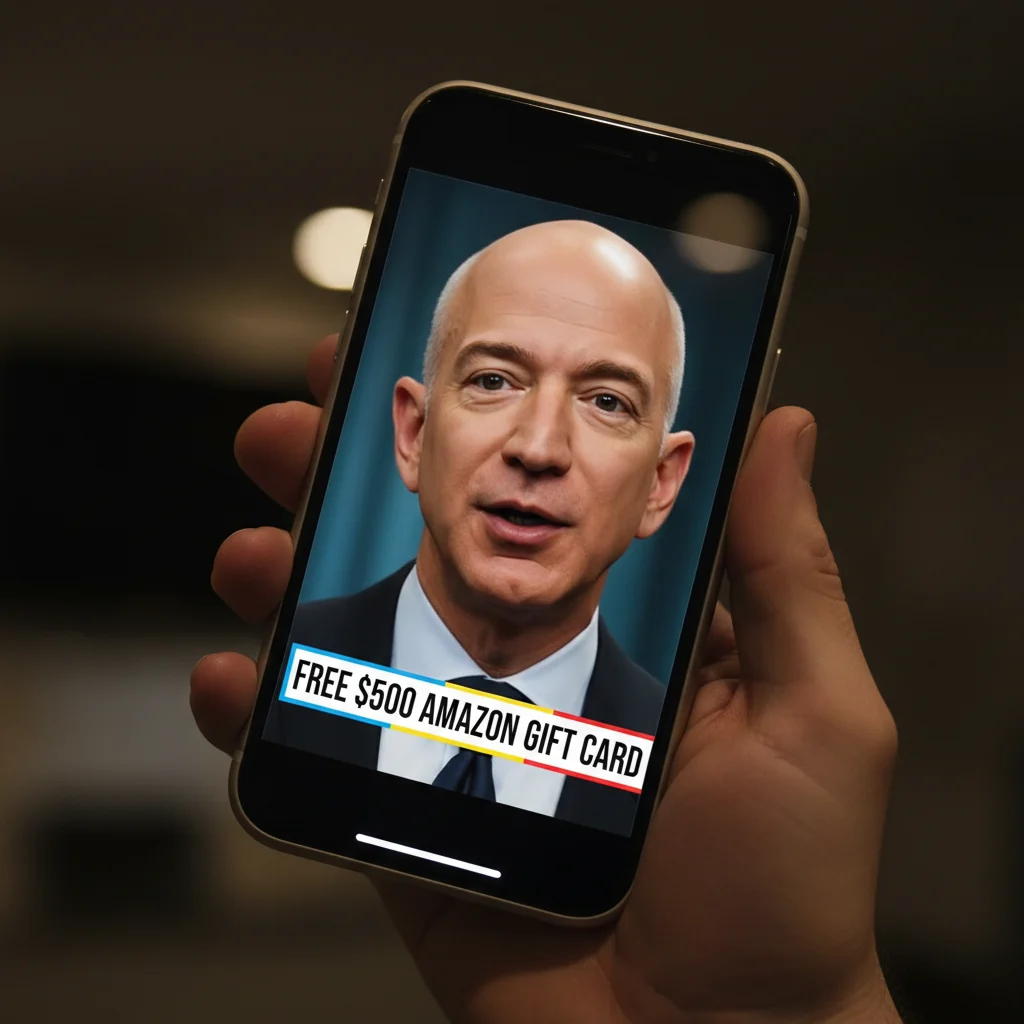
Imagine scrolling through TikTok and seeing Jeff Bezos. He is looking directly at the camera, telling you he is giving away thousands of free Amazon gift cards. It looks like him. It sounds exactly like him. But it is entirely fake.
The Federal Trade Commission (FTC) just issued an urgent warning about this viral scam. Bad actors are using highly realistic AI deepfakes of the Amazon founder to trick people into giving up their private information and hard-earned cash.
How the Bezos Gift Card Scam Works
The hook is simple. In these viral videos, the digital clone of Bezos claims that Amazon is celebrating a major milestone or launching a special customer promotion. He directs viewers to a website to claim a free gift card, usually worth between $250 and $1,000.
The link leads to a professional-looking landing page. To claim the card, users have to complete various tasks. This might include filling out “customer satisfaction” surveys, downloading mobile games, or registering for trial offers.
This is where the real damage happens. To finish the process, victims are often asked to enter their name, phone number, physical address, and even financial details. Some sites demand a small “shipping and processing fee” of $1 or $2 to verify the user is a real person. Once the scammers get your credit card number, they do not just take two dollars. They drain your account.

The Rise of Hyper-Realistic AI Clones
What makes this scam so dangerous is the quality of the technology. Just a year ago, deepfake videos were easy to spot. They looked blurry, the lips did not sync well with the audio, and the voice sounded robotic.
Not anymore. Today’s generative AI tools can copy someone’s voice with just a few seconds of audio. Combined with advanced video rendering, these deepfakes can fool almost anyone. The fake Bezos blinks naturally, moves his hands, and speaks with the billionaire’s distinct cadence.
“The technology has advanced faster than our ability to spot the fakes,” says tech security analyst Sarah Jenkins. “When people see a familiar, trusted face, their guard drops. Scammers know this and are exploiting it on a massive scale.”
The FTC’s Warning and Advice
The FTC is urging social media users to slow down and think before they click. The agency laid out several clear red flags to help consumers protect themselves:
- Billionaires do not give away free money: No matter how convincing the video looks, major tech CEOs are not handing out cash or gift cards on social media.
- Check the URL: Scam websites often use misspelled words or odd domain extensions, like .xyz or .info, instead of a real amazon.com link.
- Never pay to get a prize: If a site asks for your credit card details or a small fee to claim a “free” gift, walk away. It is always a scam.
- Do not download unknown software: Installing apps to unlock a reward is a common way for hackers to infect your phone with spyware.
TikTok Struggles to Control the Spread
TikTok’s community guidelines strictly prohibit synthetic or manipulated media that misleads users. Despite these rules, the Bezos deepfakes continue to go viral. Scammers bypass the platform’s automated moderation filters by slightly altering the video colors, adding popular background music, or constantly creating new burner accounts.
If you spot one of these videos, do not interact with it. Do not comment or share it, even to warn others, as this can boost the video in TikTok’s algorithm. Instead, use the platform’s reporting tool to flag the content as a scam immediately.
About the Author




