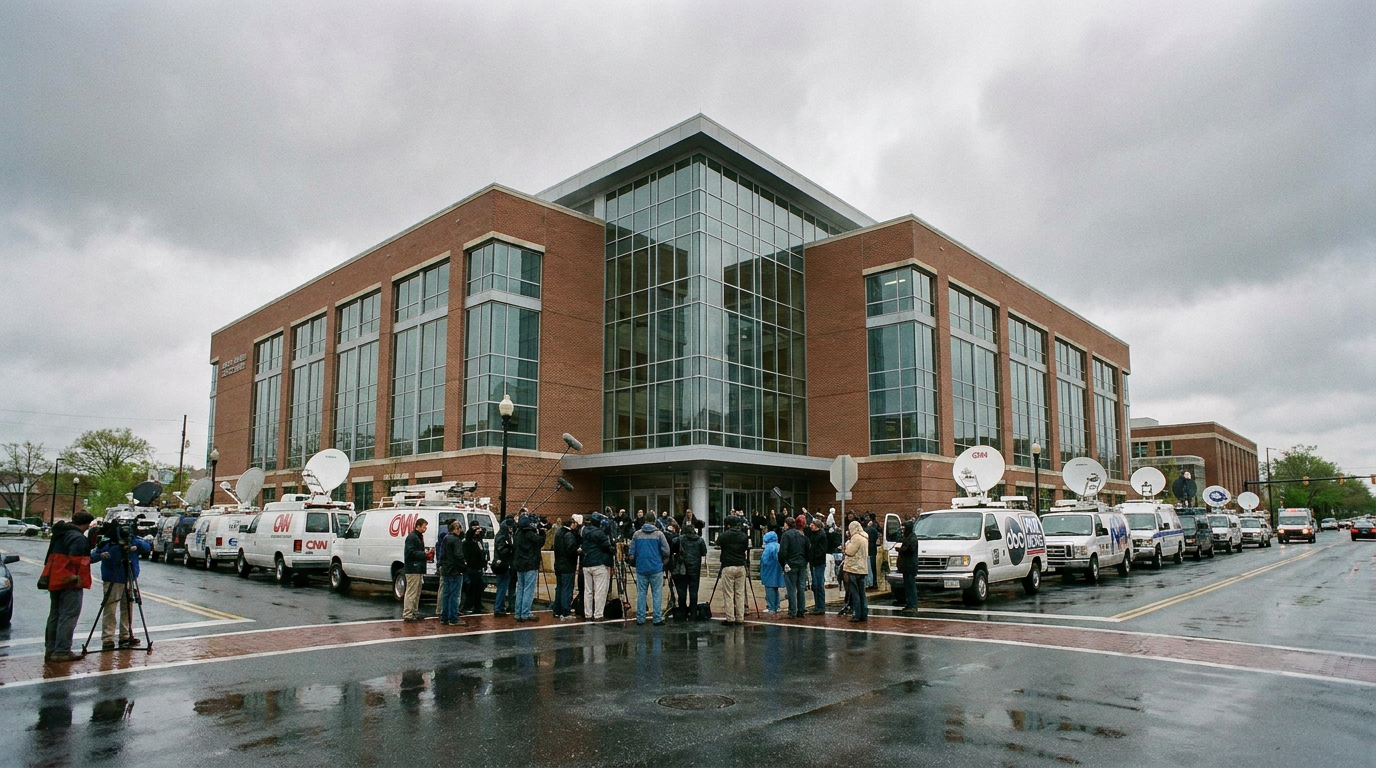
For more than a quarter-century, Fox News has mastered the art of narrative control. When controversy struck, hosts could hit back, redirect blame, or simply ignore critics while rallying loyal viewers behind the screen. But inside Courtroom 7E of the Leonard L. Williams Justice Center in Wilmington, Delaware, that playbook stops working.
Jury selection wrapped up after 300 citizens were summoned to the state courthouse, providing what the presiding judge described as more than enough individuals to seat a full panel. Opening statements begin Monday in Dominion Voting Systems’ $1.6 billion defamation lawsuit against the conservative cable giant. It marks one of the most consequential legal battles over press conduct in modern American history.
A Rare Day in Court for Murdoch’s Empire
Defamation suits against media organizations rarely survive summary judgment. Under United States libel law, public figures and corporate entities seeking damages must establish actual malice—meaning the publisher knowingly broadcast falsehoods or acted with reckless disregard for whether the claims were true. Most cases collapse long before they reach twelve ordinary citizens in a jury box.
This one did not. Fox repeatedly asked the Delaware Superior Court to dismiss the case, arguing its post-2020 coverage covered inherently newsworthy allegations brought by a sitting president. The court denied those attempts, allowing a trove of internal text messages, emails, and deposition transcripts into the public record. Those documents painted a stark contrast between what Fox personnel said privately and what they aired to millions of viewers.
Now, network brass and premier on-air personalities must reckon with that record under oath. Among those who could take the stand:

- Rupert Murdoch, chairman of Fox Corporation
- Suzanne Scott, Fox News chief executive
- Tucker Carlson, top-rated prime-time host
- Sean Hannity, long-time evening commentator
None of them will have a commercial break to lean on.
The Rules of Evidence Replace Television Rhetoric
Television studios offer complete control. Courtrooms offer almost none. Under cross-examination, witnesses cannot dodge questions by pivoting to political talking points or targeting rival news outlets. Strict rules of evidence govern what can be said, and perjury charges loom over anyone caught fabricating answers.
The pre-trial proceedings already signaled clear friction between the bench and Fox’s defense counsel. The judge repeatedly expressed frustration over the late disclosure of evidence and the handling of internal recordings, formally rebuking the network’s legal team during preliminary hearings. That tension sets a difficult backdrop for a defense team that needs to establish credibility with the jury from day one.
High Financial and Reputational Stakes
Dominion alleges that Fox systematically promoted wild, debunked conspiracy theories claiming the election technology company flipped votes to rig the 2020 presidential contest. The voting machine vendor argues that Fox did so out of panic, fearing it was shedding viewers to farther-right competitors after correctly calling Arizona for Joe Biden on election night.
Fox maintains that its reporting fell squarely within the First Amendment’s broad protections. It insists that holding a news network liable for reporting on allegations made by a president’s legal team sets a dangerous precedent for all journalists.
Still, the financial risk is immense. A $1.6 billion judgment would deliver a stinging blow even to a company as wealthy as Fox Corporation. Yet the reputational fallout could cut even deeper. For weeks, jurors will dissect internal communications showing private doubts alongside public assertions. If recent weeks of motions and hearings are any guide, Fox News is about to experience an environment it has never encountered before: one where spin simply carries no weight.
About the Author






