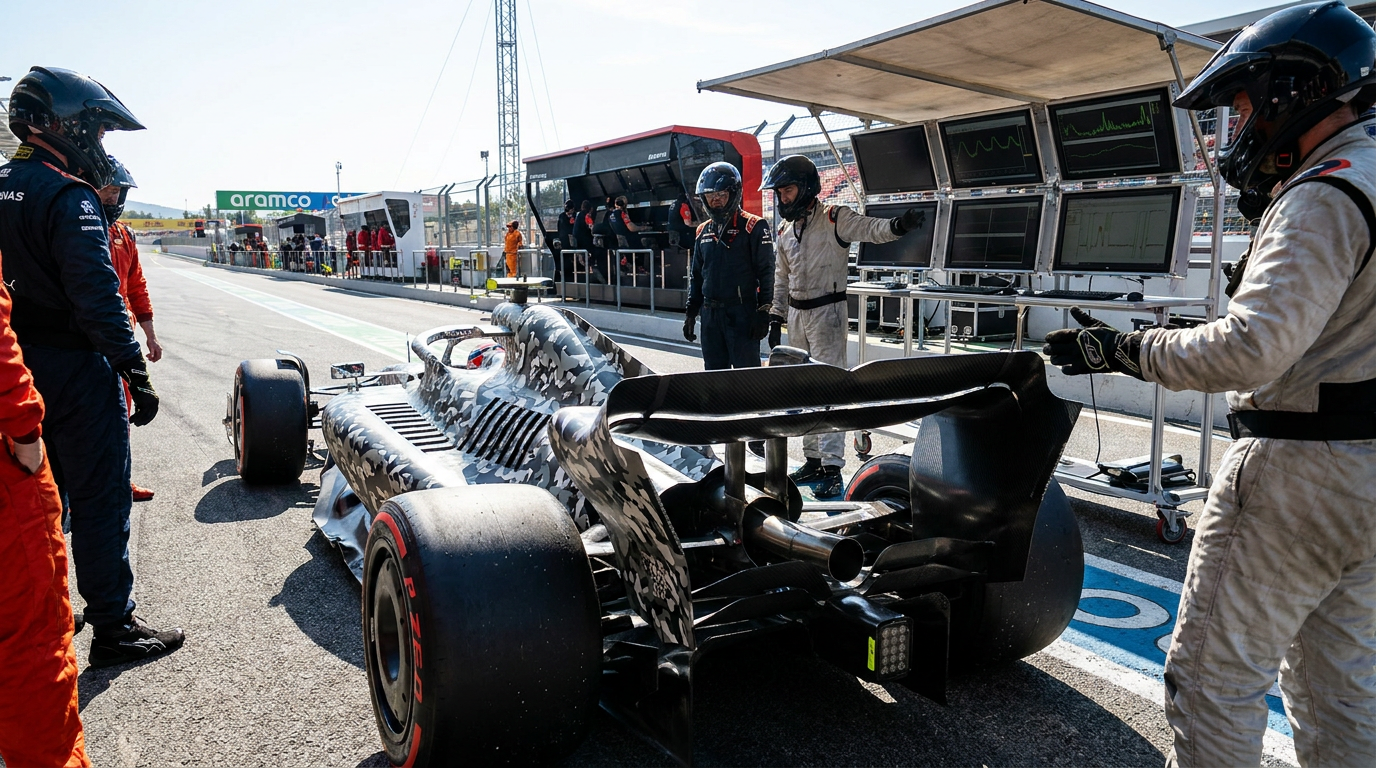
AUSTIN, Texas — The Formula 1 paddock arrived at Circuit of the Americas this week with championship battles on track, but a different fight is brewing behind closed garage doors. Technical directors spent Thursday huddled in hospitality units, debating the FIA’s latest technical directives governing the upcoming 2026 regulation overhaul.
With the 2026 rule set demanding a near 50-50 split between internal combustion and electrical power, rival teams are already probing the rulebook for competitive edges. The sport’s governing body has noticed. In Austin, scrutiny centered on two critical areas: the actuation mechanisms for movable wings and software tricks controlling battery discharge.
The Active Aero Dilemma
The 2026 aero philosophy ditches DRS in favor of dual-state active aerodynamics. Cars will run in high-downforce ‘Z-mode’ through corners and shift to low-drag ‘X-mode’ on straights. Both the front and rear wings will adjust automatically or at designated points to prevent dangerous aerodynamic imbalances.
Yet, engineers rarely leave systems alone. Rumors circulating down the Austin pit lane suggest at least three engine manufacturers raised flags about aerodynamic aero-elasticity. Teams fear rivals might find ways to induce wing stalling or flex active elements outside the designated transition windows, creating illegal ground-effect downforce in low-speed sections.
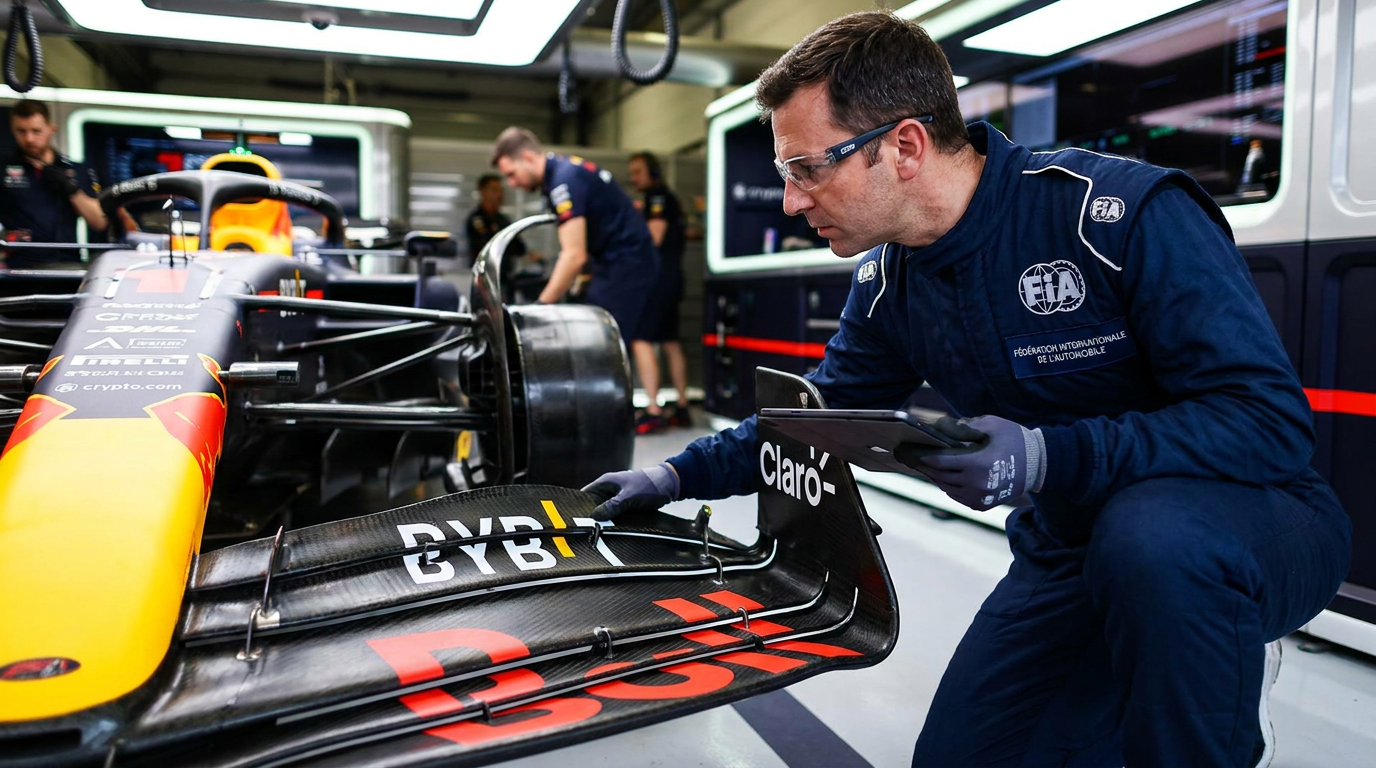
FIA single-seater director Nikolas Tombazis addressed the paddock’s growing anxiety during a technical briefing, noting that the federation is tightening its load deflection tests before full-scale scale-model and CFD development accelerates this winter.
“We want to ensure nobody uses active control systems to circumvent static load checks,” Tombazis said. “The distinction between driver safety modes and performance-enhancing aero manipulation must stay crystal clear. We will refine the definitions as many times as necessary.”
The 350kW Battery Balancing Act
Power units are proving equally contentious. The 2026 power units scrap the complex MGU-H, leaning heavily on a beefed-up kinetic motor generator unit (MGU-K) delivering 350kW — roughly 470 horsepower. That is almost triple the electrical power of the current machines.
Harvesting that much energy over a single lap is a massive headache. On circuits with long straights like Austin’s back straight, simulation models previously showed cars running dry of electrical boost hundreds of meters before the braking zone, forcing drivers into aggressive lift-and-coast tactics or even bizarre mid-straight downshifts to recharge.
The FIA responded with a sliding scale of power deployment at high speeds alongside a manual override boost function designed to mimic DRS overtaking. Still, teams suspect rivals are exploring gray areas in turbocharger energy wastegate routing to spin up harvest rates artificially.
Where the Teams Stand
- Red Bull Powertrains-Ford: Pushing for clear boundaries on synthetic fuel combustion mapping and software parity across customer supply chains.
- Ferrari: Focusing scrutiny on battery pack thermal management loopholes that could unlock short-burst overboost cycles.
- Mercedes-AMG: Calling for strict telemetry monitoring to prevent automated torque manipulation at corner exit.
- Audi & Honda: Looking to close development deficits early by ensuring active aero activation parameters remain tightly standardized.
Mercedes trackside engineering director Andrew Shovlin pointed out that the interaction between the hybrid battery state and movable aero will define the next era. “If your aero snaps into low drag a fraction of a second early, your energy budget completely changes for the rest of the lap,” Shovlin explained. “It’s not just an aero trick or an engine trick. It’s how they talk to each other. That’s where championships will be won or lost.”
Why Austin Serves as the Catalyst
Circuit of the Americas offers a brutal case study for what 2026 cars will face. The sweeping esses of Sector 1 require maximum front-end grip, while the long run up to Turn 12 drains battery reserves fast. Engineers on the ground in Austin admit that their current data runs here are feeding directly into 2026 concept simulations back at base.
The paddock mood reflects the stakes. Budgets are capped. Wind tunnel hours are restricted. Finding an interpretation loop early can cement an advantage for multiple seasons, much like Mercedes accomplished at the dawn of the turbo-hybrid era in 2014.
For now, track action at the United States Grand Prix will dominate the weekend. But as team bosses exchange barbed remarks in Friday’s press conferences, the shadow of 2026 looms large. The technical tug-of-war has started, and nobody wants to yield an inch.
About the Author






