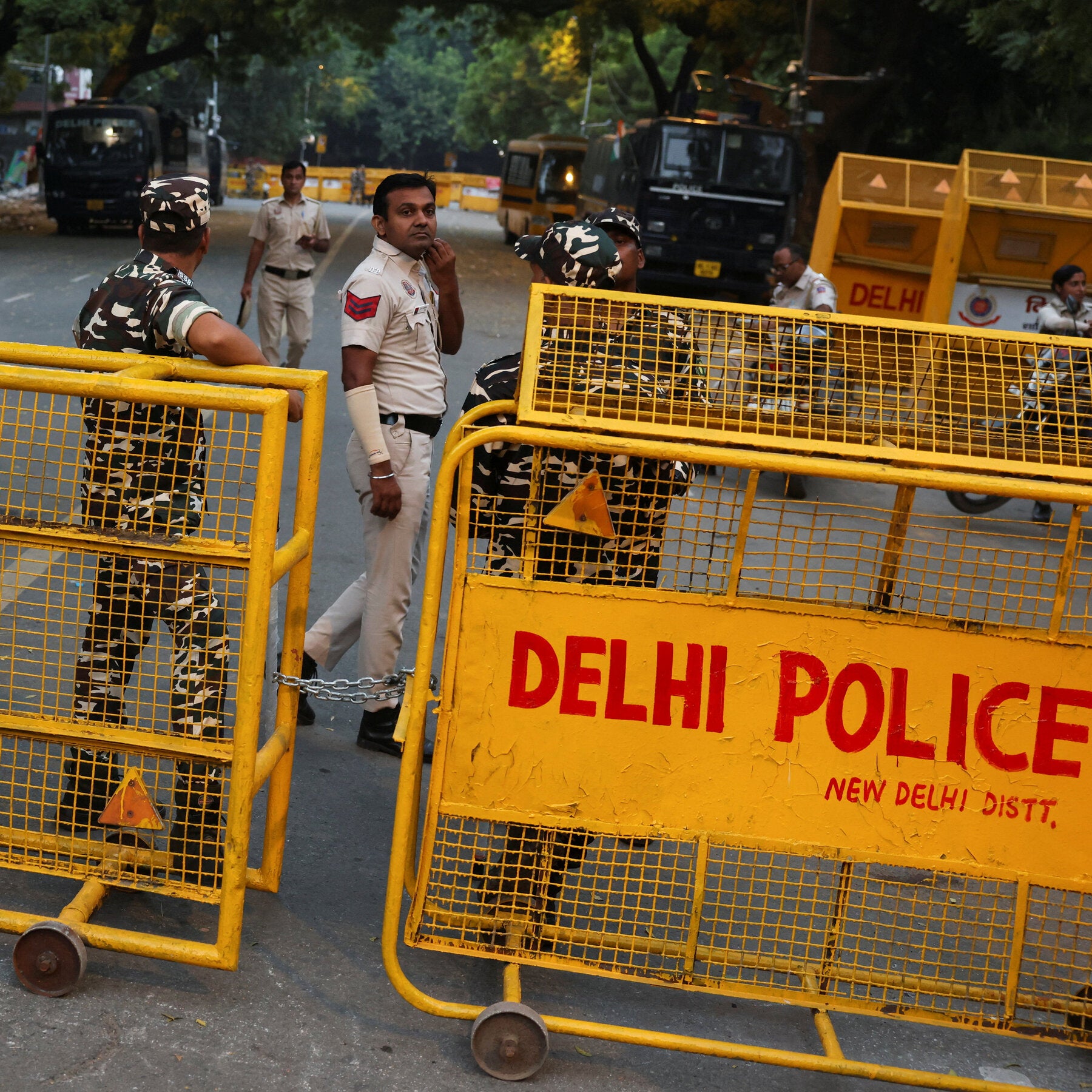
Heavy security descended on central New Delhi as demonstrators attempted to hold rallies against widespread updates to India’s voter registration lists. Armed police units, metal barricades, and rapid-action personnel set up checkpoints across key thoroughfares, tightly restricting movement toward government corridors.
The standoff follows mounting anger from civil society groups and opposition figures over recent administrative drives to recheck and alter voter rolls. Critics claim the exercise risks removing eligible citizens without adequate notice, while election officials maintain the review is a routine, necessary effort to weed out duplicate and fraudulent entries.
Tense Standoffs in the Capital
Tensions flared early in the morning when crowds started forming near designated protest zones. Before the gatherings could swell, police stepped in. Officers diverted traffic, sealed off major access routes, and detained dozens of marchers attempting to push past temporary iron fencing.
Authorities cited public order concerns and assembly restrictions in central districts, where demonstrations require advance permits that organizers were not granted. Despite the curbs, pockets of demonstrators held sit-ins on sidewalks, chanting slogans and waving placards that accused authorities of undermining democratic representation.
“People shouldn’t wake up on polling day to find their names erased from the register,” said Rajesh Kumar, an activist who traveled from neighboring Uttar Pradesh to join the demonstration before being turned back by police. “This isn’t just about paperwork. It is about whether your vote actually counts.”
What Sparked the Dispute
The friction stems from comprehensive verification exercises conducted across several states and municipal jurisdictions. Over recent months, election authorities have rolled out intensified door-to-door audits and digital verification drives designed to update residency statuses, delete deceased voters, and resolve duplicate registrations.
Opposition leaders and voting rights advocates argue the speed and scale of these changes are problematic. Their main concerns center on several key issues:
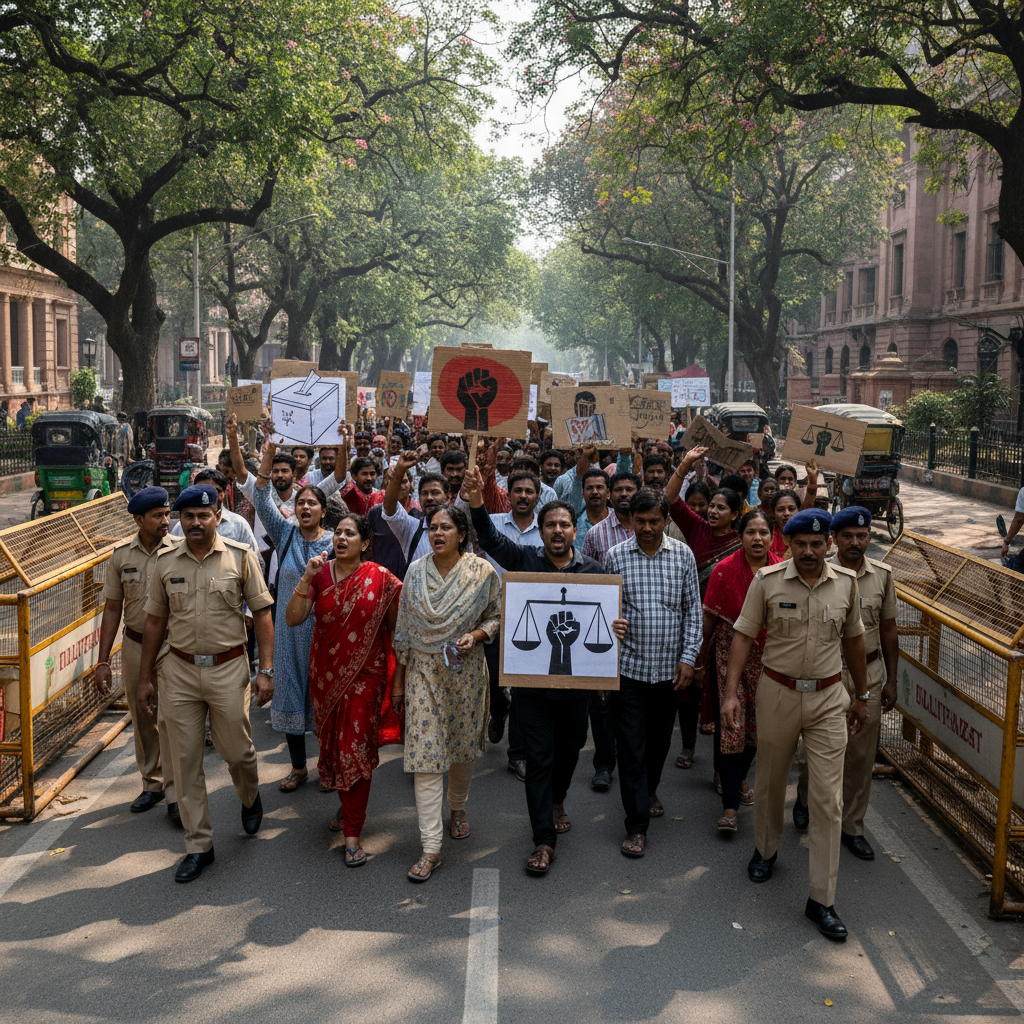
- Arbitrary deletions: Activists cite instances where legitimate voters, particularly migrant workers and low-income residents, were struck off because they were not home during daytime verification visits.
- Burdensome documentation: Demands for supplementary identity documents disproportionately affect marginalized communities who may lack updated property papers or utility bills in their names.
- Inadequate notice: Critics claim that deregistered citizens often discover their status too late to file formal claims or objections before cut-off dates.
- Lack of transparency: Activists say the algorithms and administrative guidelines used to flag “unusual” entries have not been made open to independent public review.
The Official Stance
Election authorities strongly reject claims of political bias or deliberate voter disenfranchisement. Officials insist that keeping lists accurate is a statutory mandate, especially ahead of upcoming municipal and regional elections.
Spokespeople for the election administration have emphasized that the revision process includes clear safeguards. They point out that draft rolls are published locally, giving anyone whose name has been dropped a defined window to submit appeals. Door-to-door verification teams, officials say, are instructed to make multiple visits before flagging a record as inactive or non-residential.
Security officials in Delhi defended the massive turnout of police, arguing that uncontrolled crowds near sensitive central ministries present severe safety hazards. They noted that peaceful demonstrations are permitted, but only in authorized areas like Jantar Mantar and with required clearances.
The Broader Political Fallout
The street action in Delhi mirrors a widening political conflict. Over the past week, several opposition parliamentarians have submitted notices demanding formal debates on the electoral rolls in Parliament. They allege that selective administrative scrutiny could reshape voting patterns in tightly contested constituencies.
Civil liberties organizations are preparing petitions to challenge the deletion procedures in court. Legal experts suggest the debate could soon reach the Supreme Court, particularly if petitioners can demonstrate that standard due process was bypassed during the door-to-door reviews.
What to Watch Next
With authorities holding a hard line on public assemblies and organizers vowing to continue their campaign, the issue is unlikely to fade quietly. Observers will be closely watching three fronts over the coming weeks:
- Whether election bodies extend the deadlines for citizens to challenge deletions and file correction forms.
- How high courts respond to emergency petitions seeking stays on finalized voter lists in disputed districts.
- Whether opposition parties manage to coordinate larger, nationwide demonstrations despite police curbs in major metropolitan centers.
For now, the capital remains on high alert. Checkpoints remain staffed, and both sides appear dug in for an extended fight over who gets to cast a ballot.
About the Author






