
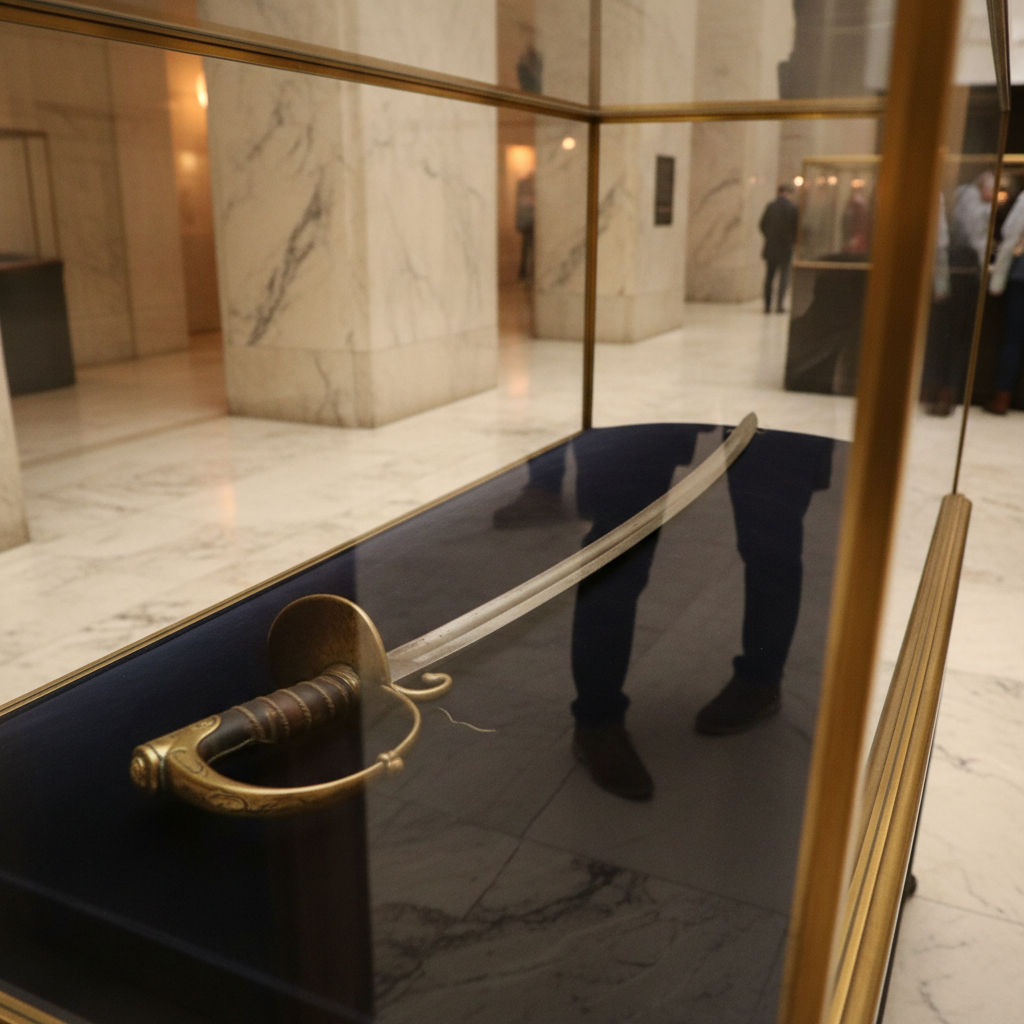
Under the glare of television lights and surrounded by ceremonial guards in immaculate uniforms, Salvadoran President Nayib Bukele recently unsheathed an antique saber. The blade belonged to General Francisco Morazán, the 19th-century statesman who once fought to weld Central America into a single republic.
Bukele was not merely staging a historical reenactment. He was unveiling a monumental new crypt in the heart of San Salvador, transferring the remains of Morazán from a modest public cemetery into an austere, granite-clad sanctuary. The spectacle revived an old Latin American political playbook: summoning the dead to legitimize the living.
The Theater of Historical Exhumation
Rulers in the region have long turned to the spade when they want to refresh their political authority. In 2010, Venezuelan President Hugo Chávez opened the tomb of Simón Bolívar on live television, hoping to align his socialist revolution with the continent’s most famous liberator. Decades earlier, Argentine leaders traded the preserved body of Eva Perón back and forth like a political talisman.
Bukele has now built his own version of that stagecraft. By unearthing Morazán, he has claimed custody over the region’s shared independence narrative. The general was born in Honduras, governed the short-lived Federal Republic of Central America, and died before a firing squad in Costa Rica in 1842. At his request, his bones were shipped to San Salvador for burial, turning the city into a quiet keeper of regional memory.
Bukele wants that memory front and center. The new crypt sits within a heavily renovated downtown core, shielded by polished stone, floodlights, and round-the-clock military guards. It presents power not as a temporary mandate, but as something permanent.
Looking Beyond El Salvador’s Borders
The ceremony comes at a pivotal moment for Bukele. Having crushed street gangs through mass detentions and secured a controversial second term in office, he commands sky-high domestic approval ratings. Yet his ambitions increasingly spill past the borders of his small nation.
Around Central and South America, right-leaning politicians and frustrated voters regularly cite Bukele’s hardline security model as an ideal blueprint. By invoking Morazán—a leader whose entire life was dedicated to dissolving the borders between Guatemala, Honduras, El Salvador, Nicaragua, and Costa Rica—Bukele is testing an ideological case for regional leadership.
- Morazán led the Federal Republic of Central America between 1830 and 1839.
- He championed secular public schools, freedom of speech, and legal equality.
- Bukele framed the reburial as a reminder that Central Americans share a single destiny.
During the ceremony, Bukele did not focus on Morazán’s military losses or the fractured politics that tore his republic apart. Instead, he treated the general’s vision as an unfinished job. The saber was shown off not as a museum relic, but as an active symbol of state authority.
A Contested Legacy
The display has rattled historians and political opponents. Morazán was an outspoken liberal reformer who fought conservative oligarchs and curtailed the power of the Catholic Church in an effort to establish a modern rule of law. Critics argue that Bukele’s concentration of executive power runs directly counter to the republican ideals Morazán died defending.
Opposition figures have dismissed the tomb as pure distraction. With public debt climbing and everyday costs weighing heavily on working-class households, skeptics see the project as an expensive distraction from domestic friction. Yet Bukele’s supporters view the site as a necessary reclamation of national pride, arguing that past administrations allowed foundational historical symbols to rot in neglected graveyards.
Either way, the new mausoleum serves a very clear purpose. In Central America, where political fortunes can evaporate overnight, stone and bone offer an anchor. By placing himself beside the region’s greatest martyr, Bukele is writing himself into the history books while he still holds the pen.
About the Author






