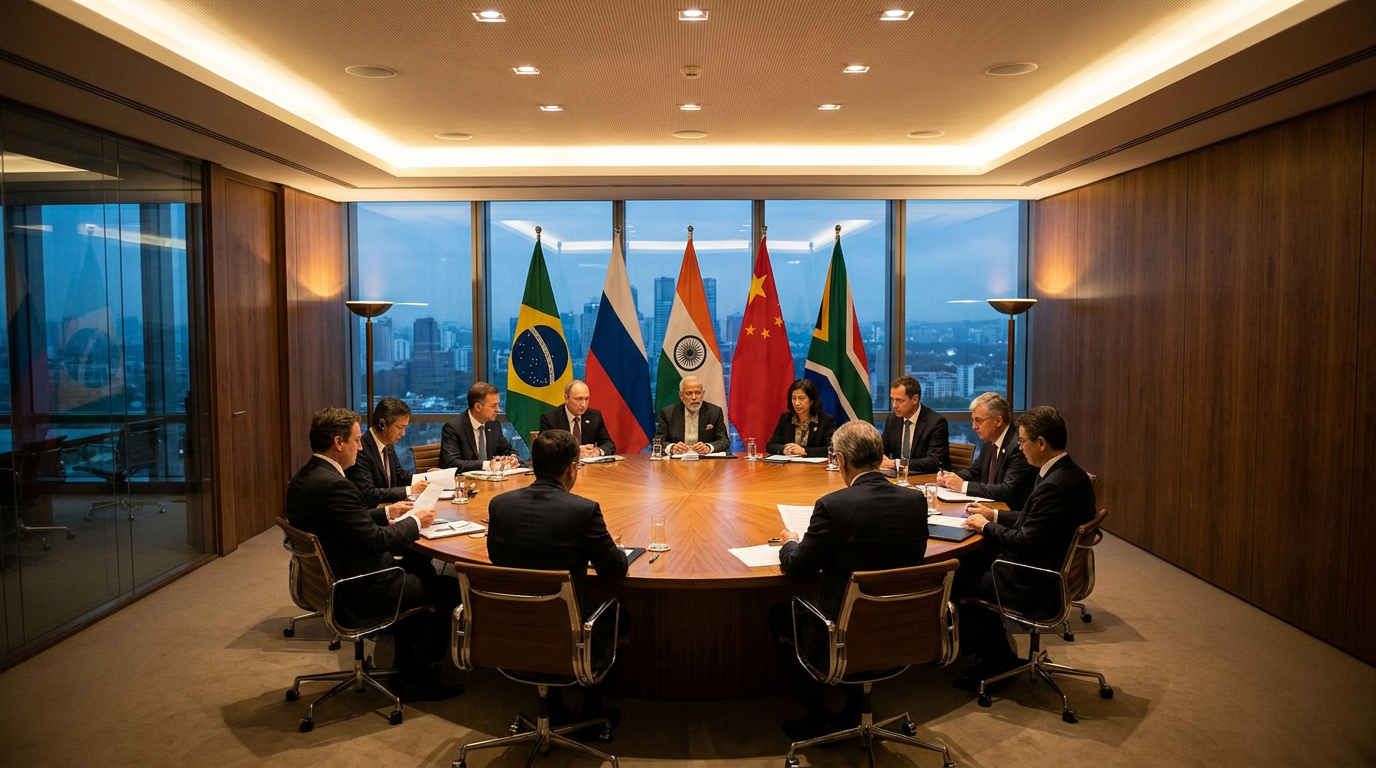
Finance ministers and central bank chiefs from the expanded BRICS+ bloc have set a pilot cross-border digital currency platform into motion. The trial run focuses squarely on energy settlements, creating a technical pipeline for member states to buy and sell crude oil, gas, and petrochemicals without clearing transactions through Western commercial banks or holding standard reserve assets.
The initiative emerged from working group meetings aimed at insulating bilateral trade from external sanctions, currency volatility, and payment bottlenecks. With the group now including major energy exporters such as the United Arab Emirates and Iran alongside top consumers like China and India, finding a direct route for settlement has turned into a practical necessity.
How the Digital Network Operates
The platform relies on a distributed ledger network connecting participating central banks. Under the trial framework, commercial energy exporters and importers use tokenized representations of their domestic central bank digital currencies (CBDCs) or sovereign currencies. These digital tokens are issued against collateral deposited within domestic central banking systems.
Transactions clear in near real time. A refinery in one member country can purchase a cargo of crude from a producer in another, with the payment clearing through an automated liquidity pool rather than routing via correspondent banks in New York, London, or Frankfurt. By eliminating the multi-day settlement chain characteristic of the SWIFT network, participants cut foreign exchange transaction fees and reduce credit counterparty risk.
Crucially, the architecture does not attempt to create a single, unified BRICS currency—an idea that economists have repeatedly dismissed as politically and structurally unworkable. Instead, it provides an interoperable bridge between existing sovereign monetary systems.
Energy Flows Drive the Shift
Energy trade has served as the catalyst for the project. Since 2022, bilateral trade within the bloc conducted in national currencies has expanded sharply. Moscow and Beijing now settle almost all their bilateral commerce in rubles and yuan. India and the UAE have finalized multiple direct rupee-dirham oil deals.

Yet, paying in national currencies has caused major structural headaches. Bilateral trade deficits frequently leave sellers holding huge balances of non-convertible currencies they struggle to deploy. Russian exporters, for instance, accumulated billions of Indian rupees in local bank accounts during 2023, unable to easily repatriate the funds or convert them into other liquid assets.
The pilot platform addresses that friction by integrating multilateral netting protocols. If country A holds an excess of country B’s currency from a gas sale, it can use the platform’s automated clearinghouse to swap those balances against imports from country C without touching a Western reserve asset.
Skepticism and Structural Hurdles
Despite the platform’s launch, serious technical and regulatory hurdles remain. Capital controls in several member nations complicate cross-border digital asset transfers. While China maintains tight restrictions on outward capital movement, other members allow significantly freer flows, creating an imbalance in regulatory philosophy.
Liquidity depth is another major test. Energy shipments involve massive sums. Single supertanker loads routinely exceed $100 million. Whether participating central banks are willing to extend adequate reciprocal credit lines to underwrite such volumes remains an open question.
Western financial observers have voiced mixed reactions. Many analysts argue the platform poses little immediate threat to the US dollar’s status as the premier global reserve asset. The dollar still accounts for nearly 60 percent of allocated foreign exchange reserves worldwide and roughly half of international trade invoices. Even so, policymakers in Washington and European capitals acknowledge that localized clearing mechanisms will gradually erode Western visibility over global oil flows.
Next Steps for the Pilot
The first phase of testing involves selected state-owned energy firms and designated commercial lenders across five member nations. Regulators plan to review transaction speeds, liquidity provision, and cyber resilience over a six-month period before opening the corridor to broader commodities, including fertilizers and agricultural products.
If the trial succeeds, the platform will expand to include additional members by early next year. For now, the experiment serves as a clear signal: the world’s largest emerging economies are no longer just talking about financial independence—they are building the wiring for it.
About the Author






