
The Contract Overhaul Begins
Major car manufacturers are quietly ripping up their procurement playbooks. For the past decade, electric vehicle supply contracts were straightforward: lock down millions of tons of battery-grade lithium carbonate, sign massive off-take deals for synthetic graphite, and secure long-term purchase agreements for liquid electrolyte solvents. Now, those multi-year commitments are being rewritten.
With late-2026 commercial pilot lines nearing completion across Japan, Europe, and North America, automakers are preparing for solid-state batteries to hit assembly floors. These packs swap out flammable liquid electrolytes and graphite anodes for solid separators and pure lithium metal foils. It is not just an engineering swap. It completely scrambles the established supply chain.
Procurement executives at groups like Toyota, Volkswagen Group, and Stellantis are shifting capital toward suppliers capable of handling exotic solid electrolytes and ultra-thin lithium metal sheets. Traditional separator film suppliers and liquid electrolyte compounders are already feeling the pinch as future purchasing volumes get scaled back.
New Raw Material Realities
Solid-state technology changes what enters the factory door. Standard nickel-manganese-cobalt (NMC) or lithium iron phosphate (LFP) cells depend heavily on porous plastic separators and liquid organic solvents. Solid-state packs replace these parts entirely.
Instead, production lines require either sulfide-based, oxide-based, or polymer electrolytes. Sulfide chemistries, favored by Toyota and its partner Idemitsu Kosan, offer fast ion transfer and quick charging, but they require massive amounts of lithium sulfide. That is a chemical specialty without a mature global spot market.
- Lithium-metal foils: Anodes are ditching blended graphite. In its place are sub-20-micron lithium metal strips, pushing automakers into direct joint ventures with specialized metallurgical firms.
- Sulfide precursors: Chemical refineries are racing to expand lithium sulfide production, a material notoriously difficult to handle and store.
- Specialty binders: Solid cell architectures demand dry-electrode polymers that can withstand high roll-to-roll pressures without degrading.
Because these materials are sensitive and scarce, purchasing departments cannot rely on open-market buying. They are signing structured, ten-year development contracts that tie cell chemistry validation directly to upstream refining capacity.
Retooling the Factory Floor
The manufacturing floor presents its own headaches. Sulfide-based solid electrolytes react aggressively with ambient humidity. If moisture contacts the material during assembly, it generates toxic hydrogen sulfide gas. To prevent that, factories must operate under extreme dry-room conditions, keeping dew points below minus 50 degrees Celsius.
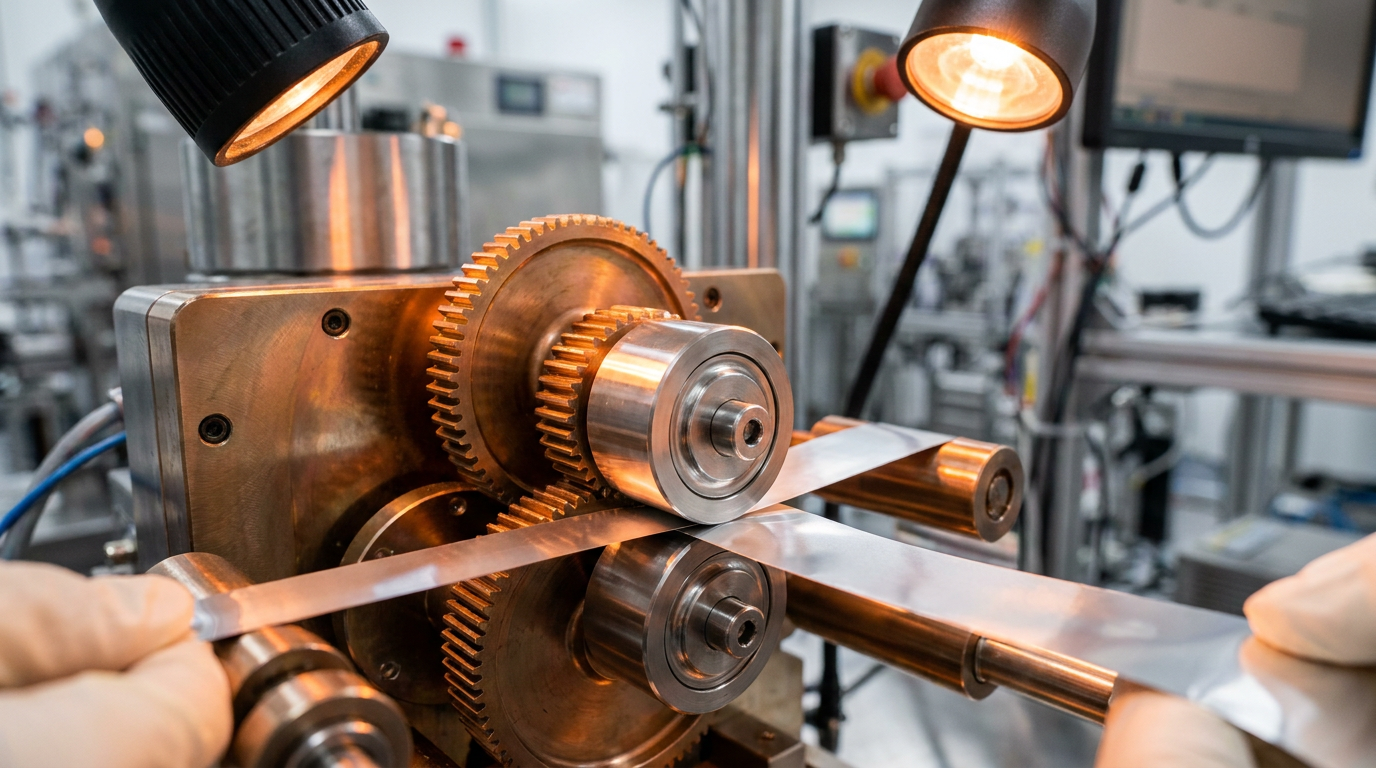
Dry rooms are expensive to build and consume vast amounts of electricity. Equipment makers are adjusting their machinery lineups, designing sealed, continuous roll-to-roll presses that isolate the battery materials inside nitrogen-purged micro-environments.
Automakers are demanding that their contract battery manufacturers shoulder this retooling risk. In recent contract filings, tier-one battery suppliers have pushed back, demanding minimum off-take guarantees before spending billions on new ultra-dry cleanrooms. The tension is palpable in contract talks across Detroit, Stuttgart, and Seoul.
Phasing Out the Legacy Stack
What happens to the current gigafactories? That is the multi-billion-dollar question hanging over boardrooms. Automakers have poured enormous sums into standard lithium-ion plants. Those assets cannot simply be abandoned.
Instead, car brands are structuring a staggered phase-in. Initial solid-state battery runs in late 2026 will target low-volume flagship sports cars, premium utility vehicles, and commercial fleet prototypes where customers are willing to absorb high early-generation costs. Mass-market commuter cars will stick with conventional LFP and sodium-ion packs well past 2030.
Volkswagen’s battery unit, PowerCo, has laid out plans to industrialize QuantumScape’s solid-state separator technology through licensing models. The idea is to adapt existing cell designs gradually rather than building entirely alien factories from scratch. Even so, suppliers tied purely to wet-chemical cell components are being told to diversify or face sharp reductions in orders by the decade’s end.
A Fractured Global Race
Geography complicates the transition. China’s battery giants, including CATL and BYD, have taken a measured public stance on pure all-solid-state designs, leaning heavily into semi-solid hybrid cells that use gel-like electrolytes as an interim step. Meanwhile, Japanese and American firms are aiming straight for fully solid systems to leapfrog Chinese dominance in conventional battery production.
That divergence is forcing multinational car brands to run split supply networks. A vehicle platform sold in North America may rely on a dry-room, all-solid sulfide pack assembled in the Midwest, while its Asian-market sibling uses semi-solid pouches sourced regionally. Navigating these overlapping supplier requirements will test automotive supply chains like never before.
About the Author






