The holiday shopping season is barely underway, but scammers are already finding new ways to empty parents’ wallets. The Federal Trade Commission (FTC) just sounded the alarm on a sophisticated cyber scheme targeting families hunting for digital Xbox gift cards.
Dubbed a “double-dipping” scam, the fraud doesn’t just steal the initial purchase money. It goes back for a second helping by tricking victims into handing over their gaming account credentials and personal financial data.
With Xbox consoles and Game Pass subscriptions topping many wish lists for late 2026, federal officials warn that parents are particularly vulnerable. They are often unfamiliar with the technical ins and outs of digital gaming platforms.
The Anatomy of the Trap
It usually starts with an ad. Parents looking for a bargain are targeted on platforms like Instagram, TikTok, and Reddit with sponsored posts advertising discounted digital Xbox gift cards. The deals look tempting—perhaps a $100 gift card for $75.
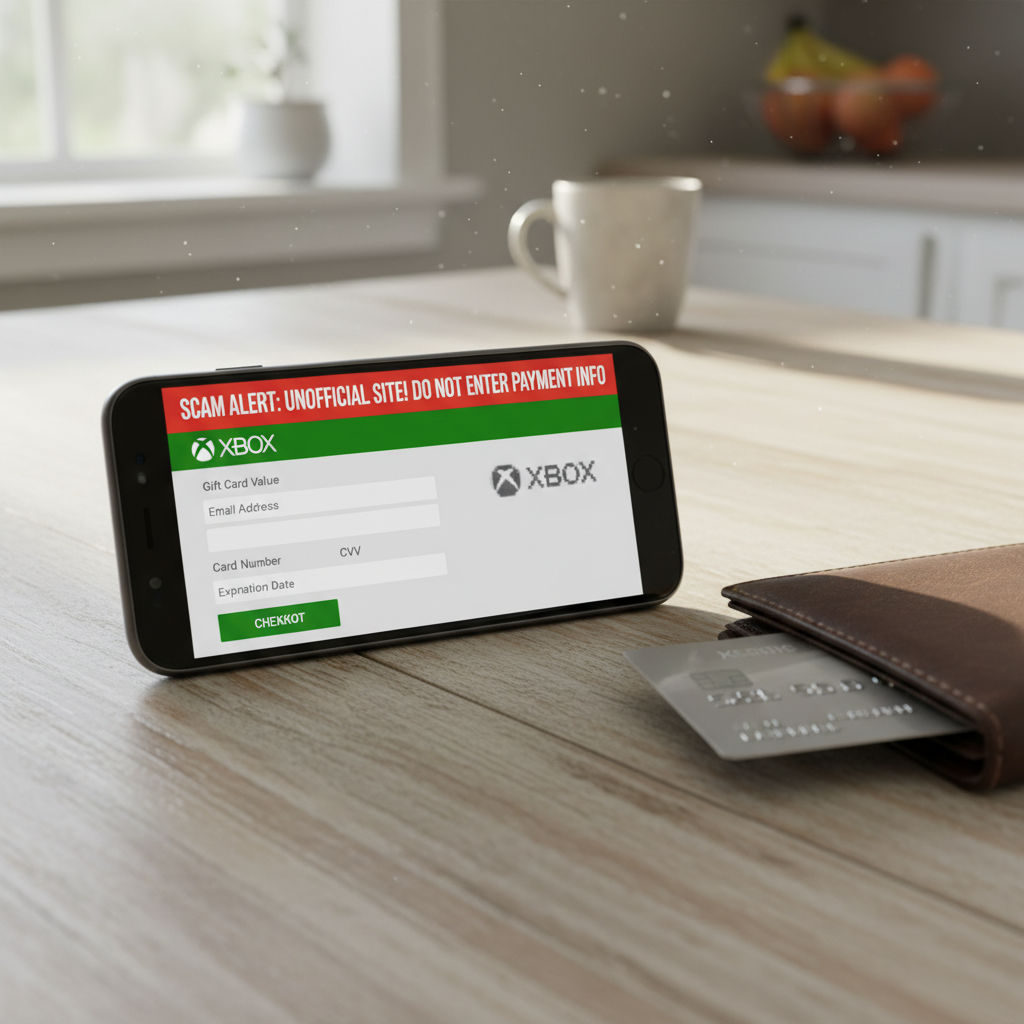
Clicking the ad redirects the buyer to a highly convincing, spoofed online storefront. The checkout process looks completely normal. Parents enter their credit card information, expecting to receive a digital code via email.
That is where the first “dip” happens. The victim pays for a product they will never actually receive. But the scammers are not finished yet.
The Second Dip: Stealing the Entire Account
Shortly after the payment goes through, the buyer receives an email with a link to claim their digital code. Clicking the link leads to a realistic replica of the Microsoft login portal, accompanied by a generic error message. The page claims there was a “verification issue” with the transaction.

To unlock the gift card, the user is prompted to sign in with their Microsoft or Xbox account details. Once they do, the scammers instantly hijack the account. If the parent tries to fix the issue by entering their credit card a second time, the thieves harvest those numbers too.
“This isn’t just about losing twenty or fifty dollars anymore,” said Samuel Levine, Director of the FTC’s Bureau of Consumer Protection. “These criminals are looking to take over entire digital profiles. Once they get into an Xbox account, they can access saved credit cards, make unauthorized purchases, and even lock children out of their gaming libraries entirely.”
The timing of the FTC’s warning is no accident. Gift card fraud has been climbing steadily throughout 2026, with the agency reporting over $15 million in losses related to digital gaming cards in the first nine months of the year alone.
Why Digital Gift Cards Are Easy Targets
Unlike physical cards bought at a grocery store checkout lane, digital codes leave very little room for physical inspection. Scammers can quickly spin up fake retail sites that look identical to official Microsoft partners. They use search engine optimization and paid social media placement to rank high in search results, catching rushed parents off guard.
Additionally, many parents do not realize that Microsoft rarely, if ever, discounts its gift cards by major margins. A 25% discount on an official digital voucher is almost always too good to be true.
How Parents Can Protect Themselves
To help families navigate the upcoming holiday rush safely, the FTC has laid out several key recommendations:
- Buy straight from the source: Purchase digital gift cards directly from the official Microsoft Store, Xbox console interface, or trusted retail giants like Target, Walmart, and Best Buy.
- Inspect the URL closely: Spoofed sites often use minor misspellings, like “micros0ft.com” or “xbox-deals-secure.com,” to trick visitors.
- Never log in to claim a card: Real digital gift cards provide a simple 25-character code that you enter directly into your existing Xbox dashboard. They never require you to log in to an external, third-party site to “unlock” the voucher.
- Use credit, not debit: If you do get scammed, credit cards offer significantly stronger fraud protection and chargeback options than debit cards or peer-to-peer payment apps.
If you suspect you have fallen victim to this scam, the FTC advises changing your Microsoft account password immediately. You should also contact your bank to freeze any compromised credit cards and report the incident at ReportFraud.ftc.gov.
Staying alert is the best defense. A little extra caution today can keep your holiday budget—and your child’s gaming profile—safe from cyber criminals this winter.
About the Author