Imagine your phone rings. The caller ID says it is your daughter. You answer, and her voice fills your ear. She is crying, panicked, and says she has been in a terrible car accident. She needs money immediately to pay a towing fee or a medical deposit. She begs you to buy PayPal digital gift cards and send the PINs right away.
You rush to do it. Who wouldn’t? But your daughter is fine. She is sitting in a college lecture hall, completely unaware of the drama. You have just been targeted by a highly sophisticated deepfake voice scam.
The Instant Cash Grab
Cybersecurity experts are sounding the alarm over a sharp rise in these high-tech schemes. Criminals now use artificial intelligence to clone voices with terrifying accuracy. Once they have a convincing voice clone, they manipulate victims into buying high-value digital assets. Lately, PayPal digital gift cards have become their primary target.
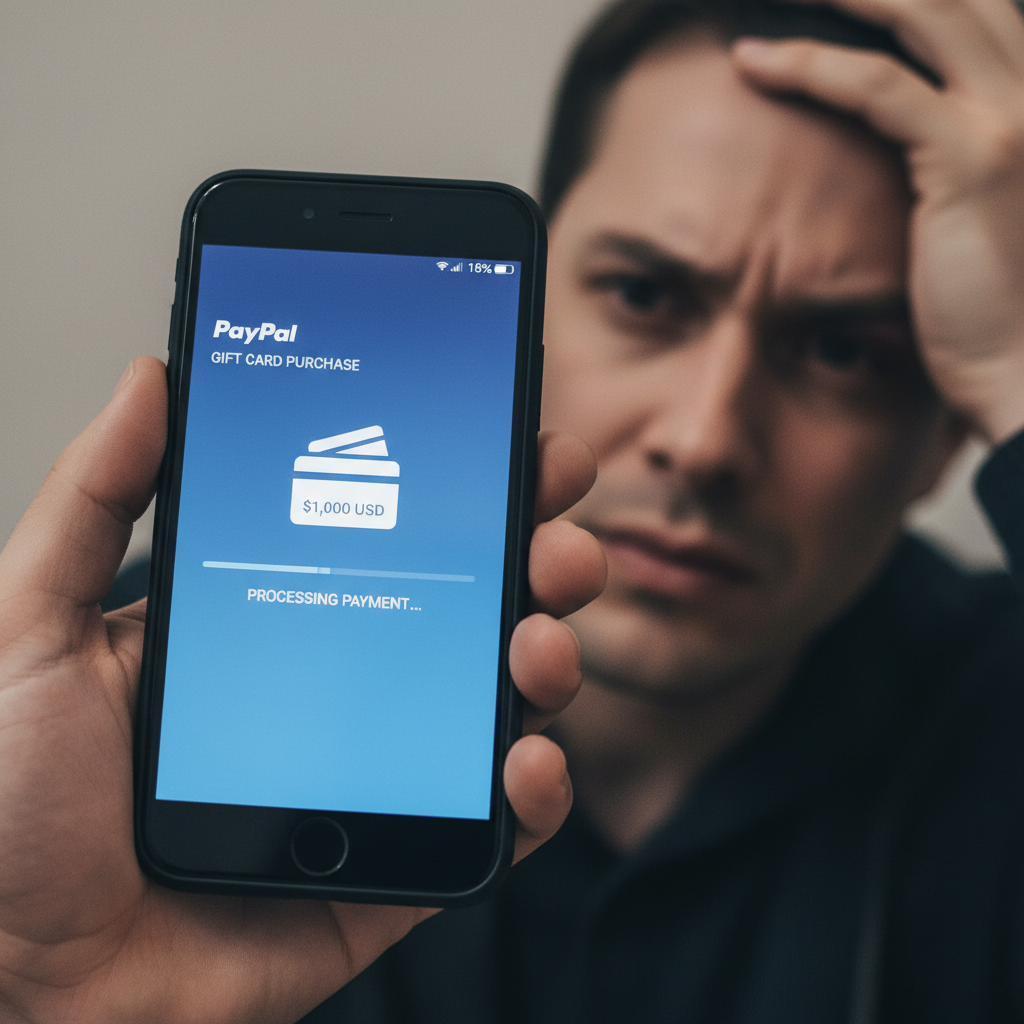
These gift cards are essentially digital cash. They can be bought in denominations of up to $500 or $1,000, transferred instantly, and spent anywhere PayPal is accepted. Once a victim reads the card numbers over the phone, the money vanishes. It is gone in seconds, routed through untraceable online wallets.
“The speed of these transactions is what makes them so attractive to bad actors,” says Liam O’Connor, a lead threat analyst at security firm ThreatLocate. “Unlike a bank wire, which can sometimes be flagged or reversed, gift card codes are laundered almost instantly. By the time the victim realizes they have been conned, the funds are already spent.”
Three Seconds of Audio is All It Takes
The technology behind these scams is incredibly cheap and accessible. Anyone with an internet connection can find voice-cloning software online. Many of these programs are free or cost just a few dollars a month.
To create a perfect clone, scammers do not need hours of high-quality audio. They need only three to five seconds of a person’s voice. They grab these snippets from public social media posts on platforms like TikTok, Instagram, or YouTube. Sometimes, they even use audio from a target’s voicemail greeting.
The AI analyzes the pitch, tone, and speech patterns. Within minutes, the software can read any script in that exact voice. The result is so convincing that even close family members cannot tell the difference.
A Threat to Businesses and Families
While parents and grandparents are the most common victims, the corporate world is also in the crosshairs. Threat actors are now impersonating company executives. They call mid-level accounting employees and demand the immediate purchase of PayPal digital gift cards for an urgent client appreciation event or an unscheduled bonus program.
The Federal Trade Commission recently warned that impersonation scams cost Americans billions of dollars annually. Amanda Cobb, a consumer protection advocate, notes that the emotional leverage makes these attacks unique.
“Fear shuts down our logical thinking,” Cobb says. “When you hear a loved one in distress, you do not stop to think about cyber hygiene. You just want to help. The scammers rely entirely on that panic.”
How to Protect Yourself
If you get a call demanding immediate payment via PayPal gift cards, hang up. Do not panic. Take a breath and call the person back on their actual phone number. If they do not answer, try reaching another family member to verify their location.
Many families are now adopting a secret “safe word.” If a family member calls in an emergency and asks for money, they must say the safe word to prove their identity. Keep your social media accounts private to limit who can access your videos and voice clips. Most importantly, remember that no legitimate business, utility company, or government agency will ever demand payment in gift cards.
About the Author