The New Holiday Scam Threat
The holiday shopping rush is starting early this year, and cybercriminals are already ahead of the curve. Security researchers are warning of a massive wave of AI-powered phishing attacks aimed directly at PayPal digital gift card users. If you plan to buy or send gift cards this winter, you might want to look twice at your inbox.
For years, internet users could spot a scam from a mile away. Bad grammar, weird formatting, and broken English were dead giveaways. Not anymore. Threat actors are now using advanced generative artificial intelligence to craft flawless, highly persuasive emails that mimic official PayPal communications down to the last pixel.
Flawless AI-Generated Lures
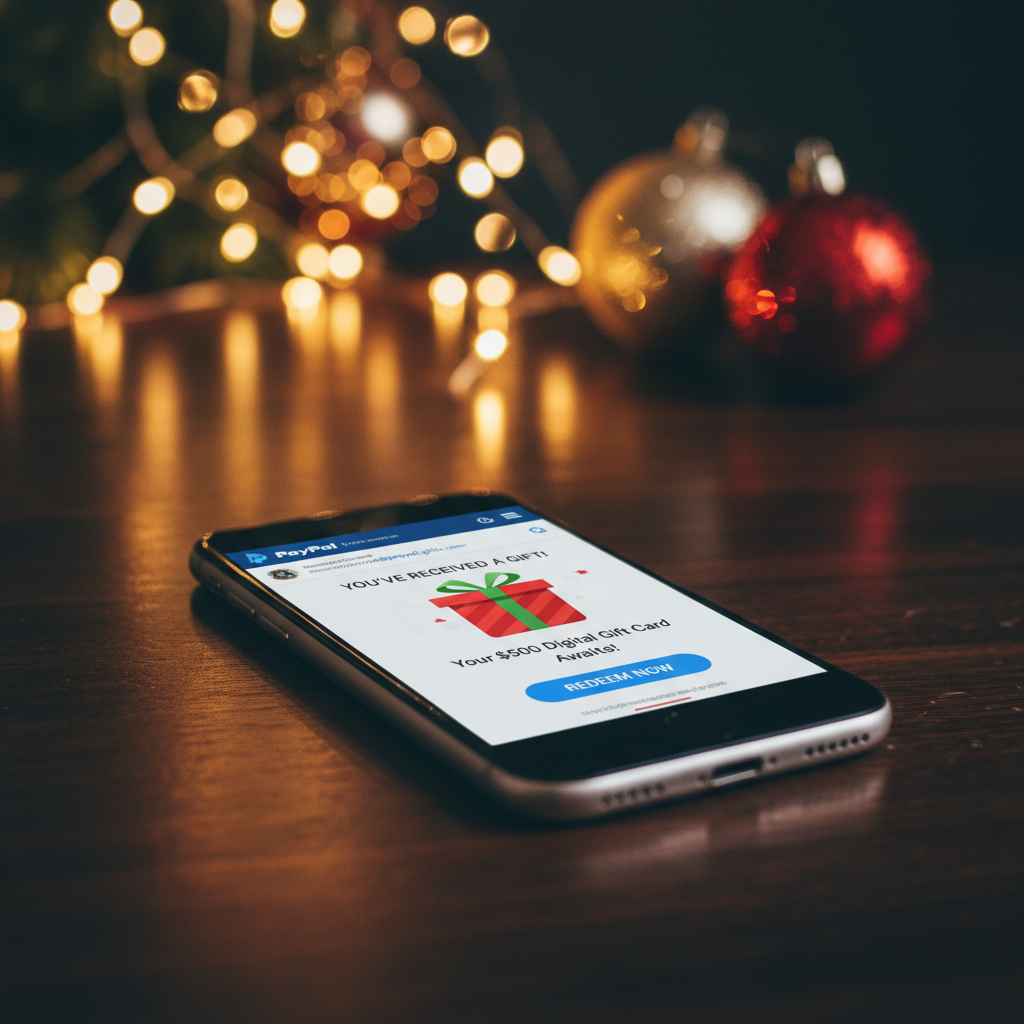
The strategy is simple but incredibly effective. Attackers send emails offering promotional holiday bonuses, like a free $50 balance with any digital gift card purchase. Other emails take a more urgent tone. They warn recipients that their recent gift card purchase was flagged for fraud or that their account has been temporarily locked.
“We are seeing a level of polish that simply wasn’t possible a few years ago,” says Marcus Vance, a senior threat analyst at cybersecurity firm Sentinel Shield. “AI has leveled the playing field for low-skilled scammers. They don’t need to write the emails themselves. They just feed a prompt into a customized LLM, and it spits out a perfect, urgent, and professional-looking message.”
Once a victim clicks the link in these emails, they are sent to a fake login portal. It looks exactly like PayPal’s official site. Once the user enters their credentials, the scammers steal the login info, drain any linked bank accounts, or instantly siphon off the digital gift cards.

A Massive Spike in Phishing Volume
This isn’t just a minor nuisance. It is a rapidly growing threat. According to new data from cybersecurity firm NetArmor, phishing attempts targeting digital gift card platforms have surged by 140% compared to the same period last year. Even more concerning, researchers estimate that nearly 65% of these active campaigns now utilize some form of AI-assisted text generation.
Automation allows scammers to target millions of people simultaneously. In the past, customizing emails for different targets took time. Today, AI tools can scrape public social media profiles, match them with leaked databases, and send personalized phishing lures in seconds. The scale is unprecedented.
Why digital gift cards? The answer is simple. They are fast, virtually untraceable, and incredibly easy to liquidate. Once a scammer gets their hands on a gift card code, they can spend it or resell it on the secondary market within seconds. Unlike credit card transactions, digital gift card transfers are rarely reversible.
How to Protect Yourself This Season
Staying safe requires a shift in how we handle our digital inboxes. Security experts suggest a few key practices to avoid falling victim to these high-tech scams:
- Never trust unsolicited offers: If an email promises a free PayPal gift card out of nowhere, it is almost certainly a trap.
- Check the sender’s actual address: Scammers can spoof display names to read “PayPal Support,” but checking the actual domain in the email header often reveals a random, unrelated address.
- Navigate directly to the site: Never click links in emails to log into your account. Always type “paypal.com” directly into your browser or use the official mobile app.
- Enable multi-factor authentication (MFA): Even if scammers steal your password, MFA can prevent them from accessing your account.
The convenience of digital gift cards makes them a favorite holiday present. However, as scammers get smarter, shoppers have to be even more vigilant. A few seconds of caution can be the difference between a happy holiday and a cleared-out bank account.
About the Author